Charlie Elk

pseudonym of a man

  • News
  • Think Pieces / Opinion
  • Turkey Hunting
    • Fall Turkey
    • Spring Turkey
    • turkey hunting tips
    • Stories
  • Humor
  • Deer Hunting
  • Willow Ridge Custom Turkey Calls

Wisconsin Game Warden Invoked a Scare in Charlie

December 8, 2016 by Charlie 6 Comments

A few weeks ago Vic and I concluded a quick pheasant hunt and then decided to move to the end of a dead end road in hopes of finding some turkeys.  As we traveled down the road, a Wisconsin warden waved us down and immediately asked if I was Charlie Elk.  An ice chunk quickly knotted in my gut, oh no!; has something happened to Mrs. Elk?  Vic and I were out cell coverage for only a short time… The concern must have shown on my face because Warden Thiede quickly added he had run my plates on his way in, oh whew, I relaxed.  Mrs. Elk has been chronically ill, so we don’t leave her alone for any extended period of time.

Warden Thiede went on the ask about our hunting success, a standard tactical question for law enforcement to get a feel as to whether or not a subject is a possible violator who is worthy of additional scrutiny.  With all the changes Wisconsin has made to our licensing system, I returned a question for each of his questions to find out what exactly a law enforcement officer would know about me by only checking my vehicle plates.  Besides, many wardens are a wealth of information regarding hunting pressure and game sightings; you just have to spend some quality time visiting time with them.   Officer Thiede was no exception he had maps of hunting lands that are not available on the Wisconsin department’s website yet.  And best of all I did not know about WDNR recently purchasing these, nor do most other hunters.

Here’s what he knew about me by just running my vehicle’s license plate number before we started conversing:

  • How many licenses and tags for what species I’d bought this season and last season.
  • Of course my name, address, phone and Hunter I.D. number. Hunter numbers are now our WDNR identification.  Contrary to what many believed, the old back tag numbers never were quickly connected to a licensee.  If a back tag number was reported, it could take hours for a violator’s identity to be reported back to a field officer.
  • How many game registrations I have made, not only this year but every year since I have been hunting in Wisconsin. That’s 50+ years! An extensive list indeed.
  • He knew many of the public wildlife areas I have hunted this season and last season.  WDNR staff take pictures of license plates they encounter in parking zones. I assume they upload these to a database.

As Wisconsin moved towards the current online license system, many raised warnings and concerns about massive increases in poaching.  However, this is clearly a false assumption.  Game wardens and sheriff deputies now of instant access to real-time information.  There is no longer room for a bad hunter to play around with their tags, once registered it is virtually punched out.  If an officer hears about someone bagging a deer or turkey, he can quickly check a registration, if nothing is recorded the warden knows he or she is on the trail of a violator.   Our new license system here in Wisconsin is very good and Go Wild is easy to use.

Filed Under: Think Pieces / Opinion Tagged With: hunting, news

Wild Turkeys See In Color; But Will Pink Spook Them?

September 7, 2016 by Charlie 18 Comments

New for the 2016 Wisconsin fall turkey season: A whole lot of gun deer hunting is going to be going on.  In my area, a month of the fall turkey season will feature a concurrent gun deer hunting season.   Wisconsin game regulations require all hunters and trappers to wear blaze orange or pink while afield during any open gun deer season.  Turkeys can easily see blaze orange and are spooked by this color, a serious problem for the state’s avid turkey hunters. But what about them seeing pink?

The eyesight of a turkey is nothing short of amazing.  Not only can turkeys see in detail that is equivalent to humans with eight-power binoculars their color vision is outstanding and includes the ability to see UVA light.

Turkey retinas have seven different types of photoreceptors.

  • One rod
  • Six different types of cones
  • Two of which are actually ‘double cones.’
  • One of the turkey’s single cone photoreceptors has a spectral sensitivity to wavelengths near 400nm which is in the UVA light range.
  • Seeing withUVA light helps when they are detecting prey, selecting a mate and foraging for food.

Human retinas have only four different types of photoreceptors, 1 rod, and three single cones.

There is one well-known chink in the armor of a turkey’s eyesight, and that is it’s only two-dimensional sight, not the three-dimensional view humans have.  Turkeys compensate for this by consistently juking their heads to focus on objects at differing distances.  An example of a hunter exploiting this vulnerability, if you can call it that, occurs while setup calling from brushy fallen treetop.  The turkeys approach expecting to see movement, and a well-camouflaged human is only allowing a small portion of their figure to move tricking the turkeys into thinking there are more of them feeding in that hide away.

Back to; Can turkeys see fluorescent pink?  On the UVA spectrum, definitely.  Considering turkeys have six types of cones they can probably see pink.  However, pink is sort of present on their heads depending on a particular bird’s mood.  So if a turkey hunter is on a setup while wearing a pink camo vest only bits and pieces of pink are going to be seen by incoming turkeys who are expecting to see other turkeys.  Might just work out better to wear pink versus the orange.

I know, I know, we all laughed when Wisconsin became the first state to legalize the wearing of fluorescent pink.  As a matter of fact Wisconsin became and may still be the but of jokes in the national hunting community, and here I am thinking about this as a solution to replace wearing the ugly hunt messing up orange.  Is pink ugly?  Not on ladies but… Personally, I have lived with a pink allergy all my life mostly because I think of it as a girly color.   During the pink legalizing debate, the whole purpose was to make ladies more comfortable hunting by allowing them to wear pink; there was no talk of real men wearing these girly outfits.   Women felt this law was condescending, and men, for the most part, made jokes. Now in all seriousness, I am wondering if this is a viable solution for turkey hunting, where can a fluorescent pink camo vest be purchased and can I work past my pink phobia to become comfortable wearing one?

pink-hunting-vest

Filed Under: Fall Turkey, Turkey Hunting Tagged With: Fall turkey, Turkey Hunting, Wild Turkey, Wisconsin Turkey Hunting

Wisconsin Hunting and Trapping Forecast

September 5, 2016 by Charlie 4 Comments

Wisconsin DNR’s annual Wisconsin Hunting and Trapping Forecast is published and available.  

The downloadable PDF is here:

2016 Wisconsin Hunting and Trapping Forecast

Download Wisconsin 2016 Hunting & Trapping Forecast

Some of the highlights inside include

Find a place to hunt in Wisconsin

Pocket Ranger App has been downloaded 210,000 times for Apple and Android phones.

  • Places to hunt
  • Deer registration locations
  • Rules and regulations
  • License and permit information
  • Safety communication tool
  • Advanced GPS mapping features
  • Trophy Case, join a community of anglers and hunters
  • News and alert feature.

Public Access Lands (PAL) Atlas

Finding Open Lands – A mapping tool shows the approximate location of all MFL–Open and FCL lands in Wisconsin – here, you’ll find landowner info, acreage, and enrollment information.

Voluntary Public Access VPA and Habitat Incentive Programs HIP

Provides financial incentives to private landowners who open their property to public hunting, fishing, trapping and wildlife observation and improve wildlife habitat.

FFlight the Fields and Forest Lands Interactive Gamebird Hunting Tool

Features available within the program will help hunters locate DNR public parking areas, overlay township descriptions, and provide access to maps and aerial photos of prospective hunting areas.

Deer District Forecasts

  • West Central
  • Northern
  • Northeast
  • Southern

Migratory Game Birds

  • Ducks
  • 2016 Changes
  • Canada Geese
  • Mourning Doves
  • Woodcock

Upland Game

  • Wild Turkey
  • Pheasant
  • Ruffed Grouse
  • Sharp-tailed Grouse
  • Bobwhite Quail
  • Rabbits & Hares
  • Gray & Fox Squirrels

Furbearers

  • Raccoon
  • Coyotes
  • Gray and Red Fox
  • Beaver
  • River Otter, Muskrat, and Mink
  • Fisher
  • Bobcat

Black Bear Forecast

  • Northeast District
  • Northern District
  • West Central District

The folks at WDNR did an excellent job producing a thorough overview of the upcoming 2016 fall hunting and trapping seasons. I highly recommend you download this document; there is lots of useful information.  You will not be disappointed.  Good hunting.

Filed Under: Deer Hunting, News, Trapping, Turkey Hunting, Upland Birds Tagged With: deer, Fall turkey, news, Turkey Hunting, Wisconsin deer, Wisconsin Grouse, Wisconsin Turkey Hunting

Wisconsin 2016 Fall Turkey Permits are available

August 23, 2016 by Charlie 8 Comments

As Monday, August 22, 2016, the Wisconsin fall wild turkey drawing is complete.  Turkey hunters must check their turkey permit status online; www.GoWild.wi.gov. At least that is the message on Go Wild, however, on the WDNR traditional website it still says-

 Successful applicants will be notified by mail the week of August 22, 2016

Last week, when I inquired about the fall turkey permits via phone, the DNR representative told me the usual postcard would be mailed to hunters the week of August 22.   Being a fellow who feels a sense of completeness when his license is in hand checked the new Go Wild site on Monday and found my turkey license waiting for me to print.

Come on fall! There has been enough video watching to this to last a lifetime.

Come on fall! There has been enough video watching to this to last a lifetime.

Where to find and buy a Wisconsin fall turkey license

  • After logging in at Go Wild and confirming your personal information, you will see your home page.
  • Select “Buy License.” Then the WDNR product catalog will appear.
  • Under the featured or Hunt/Trap tab “Awarded Fall Turkey Tag” line appears, select to bring up the Awarded Fall Turkey Tag screen.
  • The drawn tag is included with the purchase a fall turkey license at this time.
  • Conservation Patron license holders have the fall turkey license included.

Now don’t forget-

  • Remaining permits will go on sale beginning Saturday, August 27 at 10 a.m. Leftover permits will be issued on a one per-day basis.
  • Permits are $5.00 for 10 and 11 year olds, $10.00 for residents, and $15.00 for nonresidents.
  • One per day per customer, until they are sold out.

Please note that at the time you purchase your permit you will be required to purchase a fall turkey license. If you did not purchase a spring turkey license, you will also need to purchase a Wild Turkey Stamp.

Go here to review the leftover permits.

As usual, an internal review is being conducted to make sure the drawing was accurate.  The leftover turkey permits will be posted soon.

Update 9:20 pm August 23: The leftover permits are posted.  Here’s the chart of available over the counter turkey permits.

WDNR – Permit Availability

Zone Remaining Permits
FM 0
Zone 1 15,346
Zone 2 4,254
Zone 3 18,150
Zone 4 7,816
Zone 5 0
Zone 6 0
Zone 7 0

Best of luck turkey hunting and above all else have fun, enjoyable hunt.

Update August 24, 2016, WDNR mailed drawing notification postcards.  The cost of this mailing is about $17,789 including postage and the cost of printing the card and hunters still have to go online to buy their turkey license.  The game fund is operating in deficit; Why did they waste our money on this expense?

Filed Under: Fall Turkey, News, Turkey Hunting Tagged With: Fall turkey, Turkey Hunting, Wild Turkey, Wisconsin Turkey Hunting

Velvet Trophy Shows His Stuff

August 1, 2016 by Charlie Leave a Comment

vic preparing for setup

Due to Vic’s training, he will not chase deer.

On Sunday, Vic and I were out for a woodland stroll during the lunch hour.  Of course, our ultimate goal is to locate turkeys and check on the local flock dynamics.  There are so many deer across the landscape these days that most of the time they just blend into the background, but then on occasion, a few standout.

You never know what you'll see on a summertime stroll in a Wisconsin Woodland

You never know what you’ll see on a summertime stroll in a Wisconsin Woodland.

This smallish velvet buck was eating small burning nettles, as Vic and I approached he lifted his head and walked over to get a better look at us.  Fortunately, I had my camera and was able to get out and turned on.

Deer, including trophy class bucks are not afraid of dogs.

Deer, including trophy class bucks, are not afraid of dogs.

As the deer approached, Vic sat near my left leg, so I was able to snap this picture of a beautiful public land buck.  After spending the better part of a half a century pursuing trophies like this, I marvel at how at home they are around dogs.  I wrote about deer and dogs here.   I know what some readers are thinking, “Oh, well, that’s just a summertime buck.”  Wrong, this happens in the fall while wild turkey hunting, pheasant, grouse, or woodcock hunting.  At that time of year, a shotgun is in my hands, and the camera is in a waterproof, cushioned pocket so getting a picture like this is more challenging.  Interestingly the deer will tolerate my dog even if he growls or barks at them, but they will not stand around when I start digging in my pockets.

My passion these days, fall turkey hunting, so now the question I ponder; Should I go out this season and take him or should I give the GPS coordinates to some other deserving hunter?

Deer can’t be reliably saved for future years because there are too many hazards in the wild that most likely will take their lives.  In Wisconsin, a buck deer like this has about a 50% CWD infection rate.  There is a 50/50 chance  that any buck you encounter will look like this next year.

Patrick Durkin wrote an excellent piece on CWD in WI.

Patrick Durkin wrote an excellent piece on CWD in WI.  His article should be mandatory reading for all hunters.

Somewhere along the line this fall I’ll meet a deerhunter who’d like a crack at a nice buck and I’ll give them the coordinates.  Perhaps, they’ll tip me off as to where all those turkeys I’ve been seeing went.

Filed Under: Deer Hunting, Featured Stories, Turkey Hunting Tagged With: deer, Fall turkey, hunting, hunting stories, news, Turkey Hunting, Wisconsin deer, Wisconsin Turkey Hunting

Does Wild Venison Tastes Best when Procured in September or Early October?

July 28, 2016 by Charlie 17 Comments

Early Season Buck

Ever wonder if wild deer meat, venison, has a different taste and or meat quality during the year?  Which is better table fare; a buck, doe or fawn?  Many a deer hunting camp have hotly debated the second question, but it seems no one talks about or even thinks about the first question.  Perhaps, this is because due to work and family commitments most deer hunters have a limited window of time to hunt and as a result hunt during their state’s firearm season.  Most gun seasons are open later in the fall, so without a thought of hunting any other time they go out to fill freezer when they can.

Deer killed in November and December are good to eat and for many outdoor folks, some very excellent eats indeed.

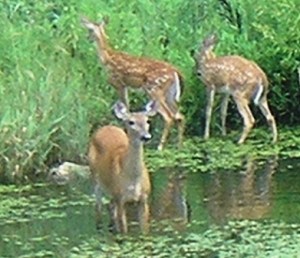
Whitetail deer numbers have grown significantly since the late 1960’s, and early 70’s when some states had to close deer season due to the small numbers or in some areas where there were no deer.  Nowadays, deer are found all over the country with very liberal deer hunting doe-2-fawnsseasons.

Here in Wisconsin farm country, deer season starts with archery mid-September continuing with a variety of seasons into January.  The long season structures give deer hunters the chance to shoot, eat and compare table venison each month of the fall.

I have killed deer throughout all of the seasons, in many years I have taken deer during each month of the open hunting periods and found early season (mid-September to mid-October) venison is the best eating.  Here’s why:

  • No matter which sex the deer, they have less fat or tallow on and in their flesh.  Tallow is not pleasant to eat, without the fat build up the venison’s flavor is not tainted nor gamey.
  •  Deer food sources are abundant and varied, so the animal does not need to travel very far to eat. Nor do they need to eat a lot during the summer months, so their meat is more tender due to much less effort required to live comfortably.
  • Neither bucks or does pay much attention to each other, for the most they stay in their chosen territories eating and sleeping to build up strength for the upcoming rut in early November.
  • The reproduction hormones are not flowing yet.  The production of these hormones seems to change both the texture and flavor, not saying it’s bad, just different.
  • Starting late October the deer begin to move about much more.  Bucks are on the move setting up breeding territories while the does attempt to avoid them.  All the extra exercise firms up the muscles which have a direct effect on the texture of the table venison.

Deer watching

Several times when I have had dinner guests we dined on venison from each month, and there has not been a single guest who did not prefer the early season deer over the later season.  All the venison is delicious no matter when it’s taken so continue hunting and enjoying yours.  Just, if you get the chance at a September deer, take it and see what you think.

turkeyanddoe

Filed Under: Featured Stories Tagged With: deer, WI deer hunting, Wisconsin deer

Grouse 2016 Wisconsin Outlook; Ruffed Grouse Drumming Survey

July 24, 2016 by Charlie Leave a Comment

Audubon painting

Audubon painting

Excerpts from 2016 Wisconsin DNR Ruffed Grouse Drumming Survey

Wisconsin statewide ruffed grouse population indices increased 1% from 2015 to 2016, based on the number of drumming grouse heard during roadside surveys. Changes in breeding grouse populations varied by region and the statewide mean number of drums per stop were not different from 2015 to 2016. Drummer densities on the Sandhill Wildlife Area in Wood County showed an increase of 2%.

While grouse populations ebb and rise on a nine to eleven-year cycle, a longer term downward trend can be noted for the Wisconsin Grouse population since the inception of this survey. Grouse highs are not as high as they have been in the past and the population seems to be slower to recover from cyclic lows. The long term aging of Wisconsin’s forest are likely playing a role in these changes. Not all regions of the state see these changes in forest aging occurring at the same rate, with the more commercial forests of the Northern and Central regions aging at a slower rate than the more privately owned forests of the Southwest and Southeast regions. It is likely this trend in grouse numbers will continue to occur until our forests reach a stasis in their aging process.

Early spring conditions were above average for temperature with most of the snow melted before the start of the survey in the spring of 2016. No major weather events should have affected surveyors during the survey period, but more typical weather returned during the second part of the inquiry period and may have reduced surveyor’s evaluations. Overall survey conditions were “excellent” on 45% of transects run, while 65% rated the overall conditions as “excellent” in 2015. Conditions were rated as “Fair”, the lowest available weather condition rating, 5% of the time in 2015 and 7% in 2016. Survey conditions do influence drumming activity and may cause grouse numbers to be over or under estimated.

800px-Ruffed_grouse_NPSView the complete 2016 Ruffed Grouse Survey here  2016 grouse drumming survey Survey contains drumming locations, charts, and graphs of the drumming data.

Grouse-Tail

Update September 9, 2016; Wisconsin’s 2016 brood counts. The following excerpt provided by WDNR.

Statewide, ruffed grouse broods seen per observer hour were down 17 percent compared to 2015 and 43 percent below the long-term mean. Ruffed Grouse production was down in two of the three regions that compose the primary range: Central (11.1 percent decrease), northern (14.2 percent decrease), and Southwestern (43.3 percent increase). Ruffed grouse brood size fell from 4.2 young per brood in 2015 to 4 in 2016.”Breeding grouse numbers were up slightly this spring, while brood production in the primary ruffed grouse range showed a decrease,” said Dhuey. “Several severe rain events likely caused declines in brood survival in the areas they occurred — while there were losses in these areas, these events were not wide-spread, and it is probable that brood production in Wisconsin is patchy, with areas of good and poor brood production and survival. While some areas of the primary ruffed grouse range will be better than others, it appears that ruffed grouse numbers will be similar or slightly worse than last year.”

Ruffed grouse are currently in a cyclic low population cycle. While an increase in breeding grouse is a positive sign, it will likely be a few years until Wisconsin returns to the birds’ cyclic high. (courtesy of WDNR)


Filed Under: News, Upland Birds Tagged With: grouse, news, upland birds

Deadline; Wisconsin Hunting & Trapping August 1

July 22, 2016 by Charlie Leave a Comment

In Wisconsin hunters and trappers have deadlines to meet.  August 1 is approaching fast; it is the fall permit deadline for wild turkey, bobcat, sharp-tailed grouse, fisher, and otter.

MADISON – August 1 is an important deadline for fall hunters and trappers pursuing wild turkey, sharp-tailed grouse, bobcat, fisher and otter.
Permit applications for fall hunting can be purchased for $3 ($6 for bobcat applications) online at gowild.wi.gov, at Department of Natural Resources service centers, and at all license agents. License sales are no longer available by phone, but the live operators at the DNR Call Center can help answer any questions hunters may have about the permit application process. The Call Center is available from 7 a.m. to 10 p.m., seven days a week, and can be reached at 888-WDNR-INFo (1-888-936-7463).

Fall wild turkey

Unit 1-5

  • Sept. 17 through Dec. 31

Zones 6 & 7

  • Sept. 17 through Nov. 18

Sharp-tailed grouse:

  • Oct. 15 through Nov. 6

Bobcat hunting and trapping

  • Season 1 – Oct. 15 through Dec. 25
  • Season 2 – Dec. 26 through Jan. 31, 2017

Fisher trapping

  • Oct. 15 through Dec. 31

Otter trapping

  • North Unit; Nov. 5 through Apr. 30, 2017
  • Central & Southern Units; Nov. 5 through Mar. 31, 2017

Fall Turkey info;

  • There will be 101,300 wild turkey permits available to hunters for the fall 2016 turkey hunting season.
  • Permit availability was increased by 200 in each of the three northernmost turkey management zones (Unit 5, 6 & 7) to meet hunter demand better.
  • Any fall turkey permits remaining after the initial drawing will go on sale beginning at 10 a.m. on August 27.
  • Leftover fall turkey permits will be sold by unit until sold out or the season ends.
  • Units 1-5 – 2016 is the first year fall turkey hunting will be open statewide on the Friday before the opening of the firearm deer season.
  • Hunters may use dogs to hunt wild turkeys during the fall season throughout the state of Wisconsin.
  • The bag limit is one turkey of any age or sex per fall turkey hunting permit.

Sharp-tailed Grouse info;

  • 25 sharp-tailed grouse hunting permits will be available for Unit 8 only.
  • Represents a 75 percent decrease from 2015.
  • Permit levels were decreased to balance hunter opportunity with a more prudent level of harvest.
  • Sharp-tailed grouse management units use the same boundaries and designations as game management units (GMUs); a map is available on the sharp-tailed grouse page on the WDNR website.
  • Hunters are reminded to review the zone map carefully and apply only for the open unit.

River Otter, Fisher & Bobcat Info;

    • Approved quotas for river otter, fisher, and are available on the trapping page of the Wisconsin DNR website.
    • Quotas for most zones are similar or slightly higher than 2015.
    • Permit numbers, based on success rates, and drawings for all three species will take place in August 2016
    • Permits will be available in early September.
    • Applicants need to check their online Go Wild account early September for an awarded a permit.


Filed Under: News Tagged With: hunting, news, trapping, Wild Turkey, Wisconsin Grouse, Wisconsin Turkey Hunting

July Gobbling in Wisconsin; when and why wild turkeys gobble

July 21, 2016 by Charlie 5 Comments

Turkeys gobble all year long.


July 21, 2016, the sunrise was greeted by profuse gobbling.  How cool is that on what is predicted to be the hottest day of the summer?

Why do gobblers gobble in July?

This morning is not the first time I have heard gobbling toms during the summer months.  There always has been a bit of mystery as to why there is any gobbling outside of the traditional spring mating season.  As a matter of fact, I’ve heard male turkeys sounding off during every month of the year, plus, many of my fellow hunters report the same type of off-season gobbling all year long.

Here is my reasoning as to the timing of gobbles

Late January – March:

  • Male turkeys are coming out of winter with different levels of physical strength along with differing levels of mating hormones.  The pecking order as established last fall is in the process of being reorganized while the bachelor flocks are beginning to separate.  All of this change is very exciting causing much gobbling.

April – May:

  • Of course, all hunters know this is mating time, the gobbling is an attempt to attract hens and scare off lower ranking toms and jakes. A mystery many hunters ponder is why on some of the spring days the sound of gobbling rings throughout woodlands and on other equally nice weather days mornings can be greeted by silence?  Personally, for the most part, I believe the amount of gobbling is directly related to the willingness of hens to mate and the number of gobblers competing for the hen’s attention.

June – August

  • During June gobbling for mating is winding down and the remaining male turkeys are becoming more interested in forming their
    Courtesy of D Gordon Robertson

    Courtesy of D Gordon Robertson

    summertime bachelor groups.  Some strutting and gobbling continue in an attempt to locate hens that did not breed or have lost their nest.  I’ve seen toms strutting in fields with attentive hens as late as the first week in August.

  • Male turkeys are less competitive and because they are seeking each other’s company rather than only focusing on hens.  Gobbling and coarse yelps are used to find each other.  A lot less fighting takes place at this time of year.


September

  • The jakes of the year are asserting themselves and anytime during the day short higher pitch gobbles will be heard.  They will be leaving
    Jakes milling around

    Jakes milling around

    their broods to form what I think of as gangs, much like teenagers who don’t want anything to do with the brood hen.  Many times these jakes seek out broods of hens with jennies to target for harassment.

  • September is an exciting time to hunt these jakes.  When you find them, they respond quickly and aggressively to calling.  Wisconsin fall turkey season opens mid-September.

October – November

  • Winter flock formation begins to take place in earnest.  As these weeks click by the flocks become larger as more birds join male flocks with separate flocks for the ladies.  Establishing pecking order in both flocks is contentious, so wild turkey calls abound at all times of the day.
  • Male turkeys, in particular, will fight, gobble and yell at each other.; This is the best time to get a fall gobbler, considered an extra special trophy by many hunters.

December – January

  • Winter has arrived, the turkeys settle in with the acquisition of food high on their daily agenda.  Occasional tiffs and arguments erupt beard swinging gobblerover the more desired food sources.  A few gobble will be heard from time to time, but mostly angry purrs or clucks warn off an encroaching turkey.
  • If a band of turkeys finds one particularly, abundant food source they will call to others and males may gobble.

All of the above is reason enough to get hooked on year-round turkey hunting.


Filed Under: Featured Stories Tagged With: Fall turkey, hunting, news, Turkey Hunting, turkey news, Wisconsin Turkey Hunting

How to Ask for Hunting Permission

July 5, 2016 by Charlie 7 Comments

Photo sent with a letter requesting permission to hunt.

Photo sent with a letter requesting permission to hunt.

Oh no, the hunting seasons are closed now what is a hunter to do?

  1. Fish
  2. Hike
  3. Excercise
  4. Practice Shooting
  5. Get permission to hunt

All the above are good wholesome & entertaining.  Personally, I put #5 up to number one.  Even though I own land, I still continue securing permission to hunt on other parcels, sometimes I trade with another willing landowner.  Occasionally,  some high-quality ambitious hunters contact me for permission to access my land.  The initial contact varies from phone calls to stopping by the house.  Nine times out of 10 the unannounced house visit is the least likely to catch me home or with time to visit.  Those call first to arrange a visit generally get a more favorable response.  With the exception of turkey season, someone is hunting my property during all hunting seasons; bear, deer, squirrels, fox, coyotes and trappers.  But I digress, that is not the point of this post.

A party of hunters sent me the above picture of those who would like to hunt my land along with a well thought out letter to “sell” me on the idea.  Excerpt from the body of the letter.

Hello my name is Steve, my son, grandson and a family friend are looking for a place to hunt.  We are looking forsome quality deer hunting land, we practice quality deer management.  But  we are not just trophy hunters we love to ear venison and will harvest does if allowed.

We understand the need to keep the deer population at a reasonable level, to reduce crop damage an over browsing.  We are very safe and ethical  hunters who are looking to pass on those values to the next generation.  We always abide by state and federal regulations.  Safety is a major concern for us, we all wear safety belts.  We have liability insurance to protect you from any lawsuits, etc. We understand that your land is valuable and very important to you and your family, we will treat the land with the utmost respect, by not cutting down trees, erecting permanent stands, driving in fields causing ruts, leaving litter or any other debris.  In a nutshesll we leave  the property as we found it or better.

They continue by offering the possibility of a modest lease payment to offset taxes and being flexible to hunt around the time slots of my family members or friends who may be currently hunting, in closing, I am invited to call them.   In my nutshell, this is a very straightforward persuasive approach, and it’s the first I’ve ever received an introductory letter of this type.   The letter gives the impression of some top notch hunters, and I would have granted them permission to hunt this year had there been an opening.  Their contact information will be kept, and they’ll be contacted for a time to hunt.

Hunting Request Letter

Filed Under: Deer Hunting, Featured Story, Think Pieces / Opinion

Deadliest Animal on Earth

June 30, 2016 by Charlie Leave a Comment

Mosquitoes use six needles to suck our blood.

Published on Jun 7, 2016 by PBS Deep Look

Seen up close, the anatomy of a mosquito bite is terrifying. The most dangerous animal in the world uses six needle-like mouthparts to saw into our skin, tap a blood vessel and sometimes leave a dangerous parting gift.


Watch this, so you have something to visualize next time you are in a deer stand or a turkey setup while feeling these prickly little beasts sawing through your skin.

Filed Under: News, Video Tagged With: bite, mosquitoes, video

Deer Can Hear Your Muscles Move?

June 26, 2016 by Charlie 3 Comments

Have you ever had a whitetail deer standing real close looking the other way while the wind is blowing from the deer towards you?  This deer appears to be totally unaware of the danger near him.  The draw is silent yet, suddenly for no apparent reason other than some dang sixth sense he tenses and bolts away out of range only to stiff leg around for a few minutes before fading off out of sight.

During my half-century of hunting a scenario like this has happened on more than one occasion.  I’ve sadly shaken my head in defeat while racking my brain trying to figure out went wrong at the moment of truth. And not just deer, other animals such as turkeys, elk, coyotes, fox, cats and bears at times have appeared to have that sixth sense warning of danger at the very last moment.  I have always thought something unnoticed went wrong, some movement, noise or scent and then redoubled my efforts to avoid making whatever mistake it was.  However, in March another possibility was unveiled to me.

Early this year the upper left side of my body seized into pain shooting down my left arm causing my hand to go numb to the point where a needle pushed through it did not produce any feeling or pain.   Needless to say, this is always a good reason to seek medical attention. Thankfully a heart attack and stroke were ruled out.  The doctors suspected nerve damage and referred me to the neurology department.

An MRI showed nerve damage at the base of my neck, so the Doctor ordered an EMG (electromyography) and this was when things got interesting as they relate to hunting.

Graph represents the noise made by contracting human muscles.

This EMG graph represents the noise made by contracting human muscles.

During the EMG I discovered when my muscles are moving and tensing they make noise, a lot of noise, the electrical static coming out of the EMG speakers was astounding. As soon as I heard that racket all those deer described earlier came to mind, and I remembered they came to attention just when my muscles were tensing for the draw or lifting the gun.  I immediately asked the doctor if any research has been done to determine if animals can hear all those sounds.  He was taken aback by that question; apparently, it had never occurred to anyone to consider the possibility.  Of course, my next request was when the test is complete could we experiment with different muscle moves.  He agreed.

I learned that if I quickly bunched up my bow pulling muscles,  the noise went off the chart and when I ever so slowly tensed those same muscles for a draw the sound produced was much more moderate, almost a flat-line.  We spent an additional 40 minutes as I experimented with different combinations of internal muscle movement while the doctor measured the sound levels and strength application.  We discovered I could apply the same pressure with and without noise.  Hmm…

Fewer deer escape me these days than did at the beginning of my hunting career.  Buck fever does not have much effect on me anymore, and I’m smoother during the seconds of shot preparation and shooting.  Perhaps there is no sixth sense, rather just a case of a very finely tuned sensory ability on the part of the prey.

Here’s a video of a basic EMG test.  Mine was much more extensive, as in a lot more needles were inserted into me but the principles were fairly close to the same as shown here.

Filed Under: Deer Hunting, Featured Story, News, Think Pieces / Opinion, Video Tagged With: deer, hunting, news

Planked Wild Turkey Breast

June 19, 2016 by Charlie 7 Comments

Time to eat wild turkey.

One of my summertime favorites is cedar planked turkey breast.  Here in Wisconsin cedar trees are considered a native invasive because they turn the soil acid and use a lot of water.   Foresters encourage editing cedar out of hardwood stands this provides me with ample opportunity to acquire 10-12 inch red cedar logs which are kept under the overhang of the shed so that direct sunlight will not over dry them.  When a disk of cedar is required for cooking, I saunter out, fire up the chainsaw and cut the disks about an inch thick.  Unlike the over-dried, thin store-bought planking wood these fresh cut cedar disks do not require soaking.

One half wild turkey breast with the silver skin and wing tendon removed.  Use a Jaccard type meat tenderizer to perforate both sides of the turkey breast to facilitate penetration of the marinade.

Marinade 

  • 1 cup soy sauce
  •  1 cup white wine, white vinegar or balsamic vinegar
  •  One quarter cup sugar (I prefer brown sugar)
  •  3 Tbsp. Lemon juice or one lemon
  •  Two clove garlic smashed or diced
  •  One sweet onion sliced thin
    Combine all ingredients, place in a ziplock freezer bag and shake the bag a bit to dissolve sugar.

Marinade the turkey overnight then drain, rinse and set aside to dry while you prepare the grill.

Place marinated turkey on red cedar disk and close the grill cover.

Place marinated turkey breast on the red cedar disk and with a closed grill cover.

Cook to an internal temperature 165 Fahrenheit.

Cook to an internal temperature of 165 Fahrenheit.

Remove from grill and rest for 15 minutes. Slice and serve.

Remove from grill and rest for 15 minutes. Slice and serve.

The method will result in tender, moist wild turkey breast meat that can be eaten with your favorites sides or sliced thin for use in sandwiches and snacks.

Other woods can be used to plank turkeys such as oak, hickory or apple.  If you don’t have a wild turkey a domestic turkey from the grocery store can be cooked using this method.

Filed Under: Recipes Tagged With: Wild Turkey, Wisconsin Turkey Hunting

Reflecting at the End of Spring Turkey Season 2016

June 18, 2016 by Charlie 10 Comments

The hen makes gentle clucks from a treetop behind me, odd perhaps, but this is one of the last days of the 2016 spring turkey season.  For the most part, the hens are now sitting to incubating their eggs.  The made morning rush is giving way to deliberate calm.  At least on the part of the hen, not so with gobbler booming in the morning to my front.  He is not in the mood to let go of his dominance or mating drive.

As the rays of sunlight begin piercing the woodland, my mind wanders over the passing days. Reminiscing about a turkey season before sunrise light shaftscompletion; who would think that is possible? This morning I’m having trouble shaking the feeling of melancholy, it’s typical at the end of a season to feel a certain reverence, but it’s not quite over yet.  As the rays of sunlight begin piercing the woodland, in spite of the hard gobbling tom, my mind wanders over the last passing days.

Gobble gobble at the hen’s soft clucks.

It all started by accompanying my grandson on his youth hunt, the memory of those seven long beards coming in while he caused and earthquake in the magnitude of 3.6. The moment of consternation when he missed one of the biggest turkeys I’d ever seen afield that quickly gave way to a warm, confident feeling he’s on the road to becoming a hunter.  He saw that insight that keeps us all hunting for just one more of those sights.

Gobble gobble the hen softly clucks.

My good friend Kody from Alberta, Canada, here on his first ever, heck he was the first Canadian ever to hunt spring turkeys in Wisconsin. Kody on set upOnly two days to hunt but we crammed a full array of turkey hunting experiences into those days.  This gobbler ushering the morning could very likely be one that Kody set up tight on; it’s in the same area.  If only Kody could have hunted one more day.  No one can predict the actions or behavior of turkeys; they are so random.  The melancholy feeling set in after Kody departed for the airport so I setup in the field point where we had a close call with several different turkeys.  I called a few times and let my mind wander savoring the memories of hunting with Kodyhunt’s highs.  Suddenly the sight of two toms walking towards the decoy jerks me back into focusing on the now.  With twotwoturkeys tags still open in my pocket, the last day of the fourth Wisconsin season, I realized the tom’s heads were going to intersect which would allow me to kill them both with one shot. A feeling of frustration enveloped me as stood over the two dead birds; why didn’t, couldn’t this have happened when Kody was here? No predicting turkeys.

The hen’s wings caress the air as she flys off roost to her nest, and I take over her clucking.  The tom does not seem to notice any difference and gobbled right back. 

Last week Rye, my Grandson from Texas came to visit, he’s seven and wants to hunt so bad.  With his help, we set up a pop-up blind, and then he had a blast randomly sticking out the decoys. He called his little heart out, dang, no turkeys showed up only some crows.  A couple of years ago I gave him a crow call to use on Texas crows, so I told him to order those crows to go away.  Well, I don’t know what he said in crow to make those crows go so wild. Whatever his calls meant to the crows remains a mystery, we were soon witnessing 25-30 crows darting about trees around us, screaming and diving at the blind.  Had it been crow season we’d have had to eat a bunch of crows.  As it was, he just blew that call with more urgency and laughing between breaths.  Oh yeah on the way back he begged to carry my gun, it’s all about fun, so he was my gun bearer.

Gobble, gobble, yelp, cluck.

Those last calls were a whole lot closer with some mind clearing directness bringing my attention fully back to the present, the shafts of sunlight are lighting the woods glistening through the rising mist. The canopy is thick late in the season limiting visibility for that turkey and me.  The early morning wet dampened the woods allowed me to move quietly and get real close to this gobbler, him and I have a little contest to settle.  The hen quietly flew off to her nest some time ago, so I took over her clucking without the old gobbler realizing the change.  His gobbles had an urgency to them now at times he sounded like he was moving away and the next sound like he was in range, but I had not heard him fly down yet.  Oh, of course, he is hopping from tree branch to branch trying see me through all the leaves.  The gobbling sounded closer and farther depending on which direction he pointed his beak during the gobble.

For a moment all went quiet and then the tell-tale thud, he is on the ground and my gun is pointed at exactly that location.  I cannot see him only his feathers are making noise as they shake and rattle with his movement.  The turkey is in range all I need to do is see him.  Tension has a way of building in these situations; I dare not move, or the turkey may periscope me and then fade away as he did on so many other turkeymornings this season.  The gun is comfortable on my knee as I grip the striker for one last cluck while hoping he is not looking directly at me.  There is no reaction to my cluck; all is quiet until that red, white and blue pulsing bulb of a head appears as if floating up a little draw in the hillside, it’s all I can see moving along.  The turkey’s body is not visible only the head; it’s in range… At the blast, the bright head disappears being replaced by a wing tip skidding down the draw.  I race to grab him to avoid joining his slide all the way to the bottom for retrieval.

A genuinely fine bird, double beard, 1 3/8” spurred gobbler.   Heck, they are all fine birds I just love turkey hunting.

spurs tongue teaser call

Filed Under: Featured Story, Spring Turkey, Stories, Turkey Hunting Tagged With: Turkey Hunting, Wild Turkey, Wisconsin Turkey Hunting

Turkeys are Hatching in West Central Wisconsin

June 12, 2016 by Charlie 5 Comments

Turkeys are hatching in West Central Wisconsin

Turkeys are hatching in West Central Wisconsin

3 egg nest

This photo was taken one day before the next one which shows four eggs.

In spite of wet, chilly weather wild turkeys are hatching all across West Central Wisconsin. Ground temperatures are more important than the air temperature in determining the timing of laying, setting and hatching.   Recently hatched poults are being reported near their nests with the brood hen nearby watching over them.

Recently hatched wild turkey poults in West Central Wisconsin. June 11, 2016

Recently hatched wild turkey poults in West Central Wisconsin. June 11, 2016

Turkeys lay eggs one at a time, one per day in open woodlands or along the edges of fields.

Turkeys lay eggs one at a time, one per day in open woodlands or along the edges of fields.


Other broods that consist of fully feathered poults with limited flying skills have been seen along roadsides and in ditches feeding on insects.   Insects are the most important first food items for the newly hatched turkeys. These poults are roosting in trees at night; this provides them much more safety than huddling on the ground with their brood hen.

When poults are a few days old and flightless they remain frozen in place as their primary defense.

When poults are a few days old and flightless, they remain frozen in place as their primary defense.

Poults can be very hard to see in all the lush springtime growth. More than likely poults have been hatching since early May when ground temperatures rose to 50 degrees.

turkey poults 3

Three wild turkey poults in this picture. Notice how well they blend into their surroundings.

If a brood or nest is destroyed, hens will re-nest until late August to early September, and this is why hunters sometimes see grouse sized poults in October.


Hens store sperm for about 90 days to make re-nesting possible.  Gobblers can continue to breed hens through July; occasionally strutters will be spotted in fields during July with hens present.

Courtesy of D Gordon Robertson

Brood hen with poults. Courtesy of D Gordon Robertson

If you like what you see, I urge you to get out and see what is going on in your area and then let us know here in the comment section.  I really enjoy being out at all times of the year.


Filed Under: Featured Story, News, Spring Turkey Tagged With: Wild Turkey

Wisconsin 2016 Spring Wild Turkey Beats 2015 Registrations

June 5, 2016 by Charlie 3 Comments

WP_20160522_004Wisconsin’s spring 2016 wild turkey registration total is 11% higher than last year.  Preliminary total harvest has 45,496 turkeys registered spring 2016.

  • Unit 1 had the highest turkey harvest 13,862 for a 22% success rate.
  • Unit 2 registered 11,083 turkeys 23% success rate.
  • Unit 3 registered 10,348 birds 20% success rate.
  • Unit 4 registered 6,698 birds, success rate 21%
  • Unit 5 total 2,071
  • Unit 6 total 813
  • Unit 7 total 510
  • Fort McCoy checked in with 111

Total 2016 turkey permits issued 213,672 compared to 2015 issued permits 208,250. About 26,000 applicants who were drawn did not buy their license.

Keep in mind the number of turkey hunters is less than the number of issued permits because each hunter is allowed to buy more than one tag.  The total number of spring turkey hunting licenses sold each spring in Wisconsin ranges between 100,000 to 120,000.

How should hunter success rates be calculated?

Currently, WDNR calculates the state success rate using the total number of permits issued giving Wisconsin hunters a statewide success rate of 21.3%.  If the success rate calculation is done using the number of hunting licenses sold, which would accurately represent the number of individual hunters, the success rate is 41.36% assuming 110,000 spring hunting licenses were sold.

If the average hunter in Wisconsin buys two permits;  And that hunter shoots one turkey are they successful? Or do they need to fill both permits to be successful?

What about the obsessed turkey hunter who purchases at least one permit per weekly season, perhaps more than one permit in the later seasons, so they have 7 or more permits to hunt.   How many of those permits do they need to fill to be considered successful?

Other hunters buy extra permits in other units and time periods so that they can spend time hunting friends or family in those areas. Perhaps they only hunt a day for two or don’t hunt at all due to personal scheduling conflicts.

Bottom line. Does the success rate percentage really matter?

Hunters can apply now for their 2017 spring turkey tags.  Log into your account on www.GoWild.gov, “Buy permit application”, under application and points.  Applications can be changed anytime and as many times as needed until the December 10th deadline.


Filed Under: Featured Stories, Spring Turkey, Turkey Hunting Tagged With: news, Turkey Hunting, Wisconsin Turkey Hunting

First Canadian Who Turkey Hunted in Wisconsin

May 27, 2016 by Charlie 13 Comments

Kody on huntFirst Canadian Hunts Turkeys in Wisconsin

The gobbler raucously ushered in the sunrise causing the Albertan hunter to shiver.  It had to be excitement because it’s a lot cooler from where he came, so considering this was the first turkey he’d ever heard no turkey hunter would think there any other reason for the quaking.

All the way from Edmonton, Alberta, Canada; Kody came to West Central Wisconsin for his first-ever wild turkey hunt.  To my knowledge and that of the turkey Maven within the Wisconsin DNR Kody is the first Canadian to attempt the spring turkey hunt here.

Kody and Charlie met each other seven years ago as contributors on the Outdoor Life forum.  At first, they exchanged good-natured jabs and humored filled stories then moved on to email exchanges and phone conversations. There are those who think it odd or even a bit dangerous to hunt with someone you only know via “technological conversations.”   However, I have not found that to be the case rather when someone is or thinks they are anonymous the real person is on display for all to see. Whereas, in person, we are all more careful to maintain the veneer of respectability.

The adventure started as soon as Kody arrived to pick up his rental car, incredibly customs was not a problem rather as events were to unfold it was the map provided by the car rental folks.  Since Canadian I phones don’t work in the states, Kody would need to rely on this sketchy map, in the dark as he attempts to navigate to Charlie elk’s humble, very rural adobe.

Kody stops at the local BP station in “town” to inquire with the young lady minding the store if she could fix his Apple phone.  Older folks always think any young person can fix anything tech, but in this case, the poor lass was helpless to help, so she offers the use of the station’s landline to call me.  After giving Kody detailed direction a feeling of what could go wrong stuck with me.  In hindsight, I realized he would likely miss seeing the sign for my road and drive to who knows where.  Sure enough, he has Kim call me from her house in a neighboring micro-village.  After I convinced Kim this was not a con, Kody really was from Alberta here to turkey hunt she agreed to keep him there so that I could personally retrieve him.

Finally, Kody and I are shaking hands slapping each other on the back; that is after I pull Kody away from showing Kim all his grandkid and horse pictures.  Later as we sit in the trophy room drinking introductory adult beverages, Kody remarks about how friendly everyone is so late at night.  Of course, that is because Wisconsinites are the most heavily armed folks in the nation, so everyone has learned to be very polite.  “Even more than Texas?” Yes indeed, Wisconsin has more CC permits issued per capita than anywhere else and a strong castle doctrine to boot.  At 9:30p we’d roll up the sidewalks, that is if there were sidewalks.  “She might have had a gun under her table as we talked…”  Very likely so Kody.

Knowing Kody was coming to hunt I had tried to avoid killing the gobbler at the start of this post.  He is one of those birds that roosts in the same general area every morning gobbling his head off; this is not to say he would have given me a chance to kill him if I’d tried.   Rather it’s the temptation to a veteran turkey hunter is hard to resist.  Kody had never hunted or for that matter seen a wild turkey. Whenever I mentor a new hunter, right or wrong, I try to arrange a full flavored hunt; there is so much more to a turkey hunt than a kill.  Now we are about 50 yards from the roost tree of a very robust gobbler and his henchmen who Kody on set upare ushering in the morning with all the fanfare any veteran turkey hunter appreciates; we are what is called “tight” on these birds. Getting in this close was not hard because Kody is a veteran of many other species, so he is nimble and quiet while on the move.  There is nothing between these birds and us, turkey hunting mornings like this are intoxicating. For a good 45 minutes as the sun starts to crest the ridgetop, I’m starting to think a turkey for the new guy on the first morning is a real possibility.  As happens more often than not the turkeys begin pitching off roost flying to wherever they hear hens.  The real hens had beaten my calling.

Time to move, we started trolling our way through the valley and busted a few turkeys still on roost an hour and a half after sunrise.  We spent the morning on setups working some birds here and there.  At one point as I led the way up a field crest, a couple of gobblers were strutting within gun range.  I immediately dropped back below and motioned Kody to sneak up; he got a good look at those birds as they impressed him with their getaway speed.  Turkeys run 35 mph, fly 50 mph, see like us with eight-power binoculars, and they can see 358 degrees around.  The only chink in that defense is their sight is only two-dimensional requiring them to juke their heads constantly to focus.

Kody checking the most visited area tourist attraction.

Kody checking the most visited area tourist attraction.

After lunch, a trip to see some tourist attraction and the gun range were in order so that Kody could shoot my Benelli M2.  He shot it well, and he was deeply impressed with the tight pattern produced by the Carlson turkey choke with Fiocchi nickel plated lead shells. Kody is a guy who relishes new, different things. The lush green woodland with all the sounds of life. Northern forests are generally very hard to move through and devoid of all the noisy small critters operating on the

Kody is reading the history posters.

Kody is reading the history posters.

background canvas, some locals take it all for granted. Kody noticed it all, asked lots of questions making him a real delight to hunt alongside.

We set up in the afternoon on a wooded point that extended into a corn field we called, snoozed and called some more.  Of course, all turkey hunters know what happen when we stood up to leave. That’s right, three turkeys crested the horizon and busted us. Another 5-10 minutes of sitting still while staying awake may have produced a shot.

The next morning we had to set up further away from the gobbling birds due to thin aerial cover and they had moved their roosts to the tree we had called from yesterday.  A rushed or forced set up rarely makes an ideal situation but once you are there with the gobblers right uphill, few choices remain.  Besides turkey hunters are almost always optimistic, that is until 20/20 hindsight kicks in as the birds leave going straight up the hill away from you.

As we snuck up that hill, Kody whispers “this is real hunting, I understand why turkey hunters are so addicted.”  Just then it happened again, three gobblers in strut right in front me. In my mind, Kody came

They're back...

all the from Alberta, so any possible shot is his to take.  I back away and down for Kody to get into position, again they vanish in a blur of feathers. Many times disturbed turkeys are easier to call in, with Kody in the lead we move up the rest of the way to the previous day’s afternoon setup.

gobbler-wakingWithin ten minutes of settling in and laying out a set of kee kees and lost yelps, a very nice gobbler comes running towards us.  A stern cluck stops him to turn and look at the decoy; he takes a couple of steps towards us then abruptly stops with neck extended straight up. Kody’s heart must have been beating overtime because his shoulders, head, and gun were bobbing like a cork in some big waves. The tom stood there stationary for quite some time studying the situation; this was the first time I ever wished for a turkey gun capable of shooting 60 yards.  It was tempting to have Kody take the shot and hope for the golden BB, but that is not the way I hunt and happily not the way Kody hunts.  The gobbler sauntered off in spite of my purr-clucking pleas to come 15 yards closer.

During the close encounter, my phone kept vibrating this is why I hate cell phones while hunting.  However, I have continually carried it afield just in case mrs. elk needed me back quickly. This time, it was not mrs. elk rather it was Shane who had wounded a tom at 8 am inquiring if I would drive up with Vic the turkey dog to help him recover the bird. Vic and I have provided many successful turkey recoveries to bowhunters.  My only hesitation, this time, was one a turkey was on the way in and two Kody only had 2 and half days to hunt so I did not want to burn up any of his hunting time.  When asked Kody did not hesitate to agree to help find that bird, besides, we were tired of sitting in the same place watching a dirt field without any turkey life in visual range.

When we met up with Shane Simpson, founder of Calling all Turkeys and Joe Slaton—Linden, CA 2015 NWTF national gobbler calling champion.  Kody was duly impressed with my pro turkey connections. Shane brought us up to speed with the day’s earlier event by explaining and show video of the shot.  The gobbler being hit hard probably had not gone too far after reaching the woods.  Took Vic to the last blood, he immediately scented and went after it.  The cover was thorny and think with several fallen trees.  As I typical of turkeys under stress they usually hunker down tight in stuff like this and rely on staying still to keep them out of sight. Vic’s tracker showed me that he went directly to what turned out to be the turkey squatting against one of those fallen tree tops.  However, Vic is a pointer, and I could not lay eyes on him nor could he see me due to the thick cover, so he came back.  I made what I consider an operator error; Vic pointed that tree with me standing there and the turkey hiding on the other side.  We walked around all through all the brush and brush piles; a few rodents darted about so I thought Vic may have just pointed them.  The offseason is hard on Vic as I train him not to grab turkeys he finds spring and summer, come the fall season I train him back to holding turkeys. When Joe spotted the turkey, I repeated the mantra to myself “trust your dog,” I knew better but failed my dog.  Gosh, darn it. I’ll do better next time Vic.

Those few days flew by and too soon it was Monday noon with Kody thinking more about how to find his way back to the airport and less concerned about the gobbler sounding off on the opposite hilltop. As with all the good times in life they eventually they end, it’s one of those bitter-sweet things.

Kody is a great hunting partner and guest.  He is a good hunter who is polite, considerate and came bearing healing flowers for mrs elk.  He took the time to visit with her to bring extra joy to her day.  We are both grateful he chose to visit us.


Filed Under: Featured Story, News Tagged With: hunting, Wild Turkey, wild turkey story, Wisconsin Turkey Hunting

Grandson on The Wisconsin Youth Hunt

April 28, 2016 by Charlie 9 Comments

“Grandpa I see turkeys coming.”

“Where son?”

“Coming down the hill behind us.” Boy, does he have a good game eye, a gaggle of turkeys was weaving its way downhill in our direction.

As excited as we were to get started turkey hunting on Saturday it seemed life was conspiring to keep us from it.  The game of turkey hunting is supposed to commence in the early morning dark and span the day, and that was not the way the 2016 Wisconsin spring wild turkey hunt began for us.

10:00- Found us set up in a small woodland bordered by some Ag fields. A lot of hunters would prefer setting up a blind and spread of decoys in an area like this. My grandson, like most young hunters, prefers to be outside a blind rather than in one.  Within a half hour, the craggy bark of that old tree bit into our backs making the idea of moving very appealing.  Or was it the lack of the turkeys? We moved, several miles away.

Nugget the turkey decoy. Keeps it interesting for the young ones.

Nugget the turkey decoy. Keeps it interesting for the young ones.

10:45- We left the parked truck to hike across a prickly pear littered sand barren field, clearly an area that did not look like it would hold any turkeys, at least to the casual passerby. Down an embankment along the edge of a swamp with too much water for easy walking we headed up to a hillside step and for no other reason than there were fresh turkey scratchings everywhere we setup Nugget, (yes, he named the new decoy).  We situated ourselves in a decaying blow down.  Walker on my left.

Walker turkey 04092016

A tom like this gets the most seasoned hunter’s heart beating overtime.

11:10- Walker’s picked those turkeys out, and he knew immediately they were gobblers with a gang of jakes bringing up the rear.  With all those turkeys meandering a line towards us his excitement was quite contagious.  I must admit my heart skipped a beat or two when it becomes clear exactly how big the lead gobbler was, and he was heading directly towards Nugget.

For some reason, turkey decoys don’t usually work for me.  In spite of all those past failures a few days ago I purchased a Scheel’s decoy that had been on sale for $17.89 figuring Walker would like it.  Apparently, the lead gobbler liked her too because his focus was on Nugget and seemed not to care in the least there was a trembling 13 year old trying to get a bead on his pulsing head only 12 yards away.

For me, it was an eternity from the time that old gobbler stopped, extended his head high to get a better look at Nugget and the roar of Walker’s 20 gauge.  Then inside the scream, NOOOOO… as those big wings clawed air carrying that very large turkey up above the trees and out of our lives. Shots at turkeys do not come much more perfect than that, how could he miss?  Outwardly, I whispered, “your turkey nuggets flew away, stay still and be ready.”

The following turkeys had scattered at the shot.  Turkeys have short memories and can’t rationalize what happens, they just react.  In short order, my calls calmed them down, and they started to stroll back to us.  Now you must understand the turkeys have calmed, but my grandson is still shaking from the first encounter, there is no doubt he is rationalizing the situation.

They're back...

They’re back…

Four turkeys move back into shooting range if Walker was shaking before; this time, it’s an earthquake allowing the turkeys to bust our position and retreat.  Again I call to them, for some reason, my turkey calling calms the turkeys but still does very little to calm Walker.  Six turkeys come back in range to mill around clucking and purring their contentment.  But as turkeys are prone to do given too much time they bust us and fade away again.  At this point I remind Walker about how much fun this is, he agrees grinning ear to ear.  I ask him if he is hungry for some turkey nuggets, of course, he replies.  Then let me know when you are calm, and I will call those turkeys back, again.

After about 15 minutes Walker assures me he is ready to try again.  Soft yelps and purrs waft thru the woodland soon the turkeys eagerly answer, and I amp up the calls causing the toms to do about faces and march in; who can blame a 13 old for all his excitement, we had no blind, so there was nothing between the turkeys and us.  We were sitting on the ground, so when those birds were in close, they looked down on us.  Heck, I know some veteran turkey hunters who’d crack too.

It was important to figure out why my grandson missed that first gobbler, so I measured the distance, exactly 12 yards.  Later at the gun range he never missed a turkey target at that range and then it occurred to me;  the target was just a turkey head, not the whole bird. I forgot to tell him to make sure he picks out only the head when he shoots at a live turkey.

Filed Under: Featured Stories, Spring Turkey, Stories Tagged With: hunting, Turkey Hunting, turkey hunting story, Wild Turkey, Wisconsin Turkey Hunting

Charlie Elk’s Back, here’s what happen

April 18, 2016 by Charlie 2 Comments

Wolves onto a FightWolf hacktivists hacked my blog.  Apparently, they did not like the post Willowridge put up “Wisconsin Wolves Eat Black Bear,” about wolves eating his bear last fall before he could recover it.  Unfortunately, there are some who will not tolerate any dissension from the narrative, “wolves are friendly, totally nonviolent compassionate animals that never bother anyone” or whatever the wolf activists want to believe. Law enforcement is investigating.   We have a good idea of who was involved in the charlie hack.

charlie is back up, if you signed up to follow posts and comments here, please sign up again.  For security, that information is kept separate and was lost during the transition period due to operator error.  Not because hackers got any information.  They were more concerned about causing a denial of service, in an attempt to destroy my search engine rankings.

No one here “hates” wolves, most of us like and admire wolves.  My primary concern is that if we don’t hunt wolves, they will move into the vermin class rather than continuing to be considered a trophy class animal.  If those activists or if you prefer anti-hunters, thought their actions would censor me. Guess again.  I grew up around wolves in Northern MN, so tune in for wolf posts.

For now, it’s turkey season in Wisconsin.  Working a post about my grandson’s hunt during the youth season.  I start turkey hunting season B.  Good luck to everyone.

Filed Under: News, Think Pieces / Opinion Tagged With: hunting, predators, wolf, wolves

Wisconsin 2016 Spring Turkey Hunt Forecast

March 30, 2016 by Charlie 2 Comments

dreamstime_l_17622897

The following 2016 Wisconsin spring turkey hunt forecast or if you prefer “prediction” is based on observations reports from my network of year-round turkey hunters.  Not only do we hunt spring, summer, fall and winter; During the offseason, we explore all 7 of Wisconsin’s turkey units noting habitat condition, flock composition, and numbers. We get out from behind the windshield to hike and glass the areas.

Admittedly this preview is subject to a lot my perception based on the field reports, experiences and years of turkey hunting.  Before the 2014 Wisconsin spring turkey hunt, I wrote a forecast based on my hunter river turkeynetwork field reports.  At that time nearly everyone, including the current WDNR Wildlife managers were predicting a horrible spring hunt, it was supposed to be so bad they cut tags by 25%; this was the first time in state history the number of available turkey tags slashed. I stuck my neck out as a contrarian with a forecast of an above average hunt.  Wisconsin’s spring turkey harvest was the second highest in the nation.

2016 Wisconsin turkey habitat is about as full of turkeys as it can get.  No one “counts” turkeys in Wisconsin so it’s left to a variety of opinions.  I think a reasonable estimate of long snoodstatewide turkey numbers is around 600,000 birds perhaps approaching 650,000; this makes Wisconsin the number one turkey state in the nation based on population.
Wisconsin appears to be at carrying capacity statewide and is some southern areas turkeys may be over their carrying capacity.   Wisconsin has experienced back to back mild winters followed by excellent springtime nesting conditions making excellent recruitment.. 2015  fall turkey hunters found high numbers of bird groups with diverse age structures.

2016 Spring Turkey Forecast for Wisconsin Turkey Management Unit 1, 3 & 4

In particular, these units have abundant turkey populations.  With the exception of northern unit 4, turkeys numbers may be over carrying capacity.  Carrying capacity is the number of a species the habitat can support during worst case conditions. i.e. severe winter.

Active fall turkey hunters reported encountering unprecedented bird numbers.  Official WDNR kill stats show a decrease in the harvest.  I believe this is due to hunter effort.  The number of fall turkey hunters has been in steady decline for several years; perhaps there are only 27,000 fall turkey hunters statewide. My point is fall hunter harvest is not a reliable indicator of the turkey population.

2016 Spring Turkey Forecast for Wisconsin Turkey Management Unit 2

I have no experience hunting in unit 2.  Tags are limited there versus the population of turkey hunters, so I leave the available tags for those hunters.  The network reports nearly the same abundance as the 1,3, and Proud Gobbler4.  So it will be an excellent spring hunt in zone 2.

2016 Spring Turkey Forecast for Wisconsin Turkey Management Units 5,6, & 7

Again reports are indicating unprecedented high numbers of wild turkeys.  There are so few tags available in these units that I have not tried to get any. For the most part, it appears residents are the primary purchasers of these rare turkey tags.  Hunters should see excellent success this spring.

charlie elk’s 2016 Wisconsin Spring Wild Turkey Hunt Forecast Summary

Can’t wait to start hunting!  This spring 2016 is set to be a record-setting season.  Unless there is significantly bad spring weather that keeps hunters out the field, the total ’16 turkey harvest will exceed 51,000 turkeys.

If you’d like to join the  charlie elk turkey reporting network please fill out this form.  Even if you don’t want to join the network please leave a reply regarding your thoughts.

Go back

Your message has been sent

Warning
Warning
Warning
Warning

Warning.

2 year old turkeys are the bread and butter of spring hunting. There should be more of turkeys found this spring.

2 year old turkeys are the bread and butter of spring hunting. There should be more of these  turkeys found this spring.

Filed Under: News, Spring Turkey, Turkey Hunting Tagged With: Turkey Hunting, Wild Turkey, Wisconsin Turkey Hunting

« Previous Page
Next Page »

Subscribe to Blog via Email

Enter your email address to subscribe and receive notifications of new posts by email. No other email will be sent to you.

comments

  • Justin on Bulllet Head Stamp Gallery
  • Kathy Eldred on Beavers Eat and Store Corn
  • Toney Jacob on Hunting Deer From the Ground in Wisconsin
  • Anthony Lumbard on Bulllet Head Stamp Gallery
  • Bryan Ash on Wild Turkeys See In Color; But Will Pink Spook Them?
  • Jim Sinquefield on How to Legally Bait Wild Turkeys

Top Posts

  • What do Wild Turkeys Eat?  Crops tell the story
    What do Wild Turkeys Eat? Crops tell the story
  • Wild Turkeys See In Color; But Will Pink Spook Them?
    Wild Turkeys See In Color; But Will Pink Spook Them?
  • Run'n'Gun or Sit'n'Wait: Why Not Both?
    Run'n'Gun or Sit'n'Wait: Why Not Both?
  • Wisconsin 2018 Fall Turkey Drawing - Canceled
    Wisconsin 2018 Fall Turkey Drawing - Canceled
  • The Turkey's Snood Knows
    The Turkey's Snood Knows
  • Below Zero; Raccoons are Out?
    Below Zero; Raccoons are Out?
  • Planked Wild Turkey Breast
    Planked Wild Turkey Breast
  • Beyond The Patterning Board; X-Rays of Shot Turkey Head/Necks
    Beyond The Patterning Board; X-Rays of Shot Turkey Head/Necks

Recent Posts

  • Kirkland Warbler, Wild Turkey use Audio Bait
  • A Little more Frigid or Warm; What is better for Wildlife?
  • West Nile Virus detected in Wisconsin Ruffed Grouse
  • When the Deer Season Ends
  • First Bubba Chili Pucks

Recent comments

  • Justin on Bulllet Head Stamp Gallery
  • Kathy Eldred on Beavers Eat and Store Corn
  • Toney Jacob on Hunting Deer From the Ground in Wisconsin
  • Anthony Lumbard on Bulllet Head Stamp Gallery
  • Bryan Ash on Wild Turkeys See In Color; But Will Pink Spook Them?

Videos

Mosquitoes use six needles to suck our … [Read More...]

Have you ever had a whitetail deer standing real … [Read More...]

Copyright © 2025 charlie elk


Loading Comments...