Charlie Elk

pseudonym of a man

  • News
  • Think Pieces / Opinion
  • Turkey Hunting
    • Fall Turkey
    • Spring Turkey
    • turkey hunting tips
    • Stories
  • Humor
  • Deer Hunting
  • Willow Ridge Custom Turkey Calls

Lucky Striker Turkey

May 27, 2014 by Charlie Leave a Comment

This gobbler seemed so easy at the  start, it’s now been 2 hours and quiet has settled in with no response to any call.   He gobbled and moved closer only to fade off as they so often do.  In the meantime there were many gobbles off somewhere else causing my stiff body to yearn for another setup.  A little while longer, his last gobble was so very close he can’t be far.

After another half hour or so with more gobbles echoing through valley I succumbed to the move bug.  Planning to return later I crept as quietly as possible back to the boat.  While stowing my gear I noticed my favorite striker was not in its designated pocket, must be back at the setup. My gaze noticed my gun laying in the boat, a quick internal debate decided it should come with even though it is a short hike to the setup.

Lucky Striker (1024x326)As I bent to pick up the wayward striker laying right where it had been set the feeling of something staring came over me.  Slowly my eyes rolled around scanning the woods, nothing… I grasped the striker and rose to leave my  hunter’s scan continuing to look for the out place line and there it was as my back straightened to full height a tom staring in my direction.  He continued advancing towards me in a juking head zigzag obviously searching for the hen who had so seductively called for so many hours.

Wild turkeys have a sharp eyesight so the slightest misstep now would send the turkey off to safe refuges only turkeys know.  Gently I leaned my left shoulder against the aspen, it had the same dappled color tones as my camo.  At this moment the tension in the that woods was stifling.  The purring turkey would take a step or two then stop, look and listen.

My right hand readied on my  gun that was pointed at the ground  in line with  my leg, both (my gun and I) were doing our best impersonation of that little tree as the turkey had slunk well within range.  The left hand must soon be brought into play…

The turkey’s head crossed behind a small tree as he started to puff into strut thought the better of it and increased his pace apparently satisfied the hen was gone there was no reason to stay.  Fingers loosened from the striker and grabbed the forearm of the rising shotgun,  my body rolled around the tree now turned to face the turkey.  The tom should have run or flew but as is so often the case they stop to get a better look when they see movement from where they expected to see a turkey.

As the roar of the gun subsided there was barely a break in the other springtime sounds.  Just me with a lucky striker laying on the ground pointing at a dead turkey.

IMGP1103 (1024x560)

Filed Under: Spring Turkey, Stories Tagged With: 2014 spring turkey, Turkey Hunting, turkey hunting story, Wisconsin Turkey Hunting

Will Wisconsin Beat Missouri Turkey Harvest?

May 17, 2014 by Charlie 1 Comment

Just in Missouri’s 2014 wild turkey season has come to an end with a total 2014 wild turkey harvest of 43,273 birds.  This is Missouri’s  third year in row of increased harvest numbers, very good news.  Congratulations Missouri hunters.

At the time of this writing Wisconsin has a statewide harvest of 35,882 with 10 days of hunting season remaining.  If Wisconsin hunters register another 7,391 wild turkeys we will tie Missouri.

Why does this matter you ask?   Well it really doesn’t- Just interesting because Missouri is considered a turkey hunting mecca, a turkey hunting powerhouse of t he nation.  On the other hand Wisconsin ranks low on the turkey hunting community’s radar.  How many turkey hunters dream of making a trip a Wisconsin in the spring.  Heck a lot turkey hunters I know travel out state seeking to find the promised land of turkey hunting.

Perhaps, my fellow Wisconsin turkey hunters we are living in the turkey hunting promised land.  The turkey population is high, depending on who is estimating the range is somewhere between 500,000 – 600,000+.  No one counts turkeys in the state and harvest data has no mathematical bearing on the actual numbers.  There are only about 85,000 turkey hunters in the entire state and the hunters are spread out over 6 weeks.  A single hunter may buy as many permits over the counter as they choose and there are still thousands left that will likely go unsold.   The terrain is varied from big northern pine woods, big central hardwoods that cover both flatland and steep bluffs, farmlands,  rivers, swamps and prairies.  Allowing a turkey hunter to select the type of hunt they feel like without driving large distances out of state.  Without all that windshield time a hunter can spend more time in the turkey woods.  What’s not to like?

Hunt on to end of the last season.  Remember it’s a long wait to spring 2015.


Filed Under: News, Spring Turkey, Turkey Hunting Tagged With: 2014 spring turkey, hunting, news, Turkey Hunting, Wild Turkey, Wisconsin Turkey Hunting

Sometimes It’s Easy

May 7, 2014 by Charlie Leave a Comment

Season-C-Unit-2-Wisconsin-Turkey

It was one of those rare magical turkey hunting mornings yesterday, when the weather is beautiful & the turkeys are loud & suicidal.

Morning alarm set at 3am, 70 mile drive to northern unit 2, in the woods before 5am, turkey down at 5:30am.  Nice size, 22+ lbs.  5+ pounds of turkey breast to be smoked at Maplewood Meats.

I had planned to hike in about a mile, most of it no-trail, to a wooded ridge.  But turkeys gobbled nearby while I was getting out of the car.  Set up just a few hundred yards in, 100+ yards from two competing gobblers.  Then I fixated on a bunch of brush about 8 yards in front of me, worrying that I wouldn’t have a clean shot.  So I stupidly crawled forward & snipped branches.  Bad move.  I never heard the two gobble again.  But somebody must like me, since a third soon lit up 200+ yards out in a different direction.  I only ended up calling twice to bring him in, soft yelping & clucking.  He came in quiet the last hundred yards, stopping to strut every half dozen steps.  While I was tagging him & taking photos another nearby tom began gobbling & was still gobbling as I walked out.

It was the 3rd day I hunted, & the first decent weather day.  The other hunts had several non-turkey critter adventures involving a fox squirrel, multiple deer, & a coyote.  Had one turkey near-death Thursday.  The tom was 60 yards out, coming uphill gobbling to me when a doe & two yearlings stepped out between us.  Never saw them until they were in front of me.  Incredibly they lingered for 15 minutes 15-20 feet from me while the tom gobbled & plucked on the other side of them.  A lot more to that story, but the ending was no turkey.

Interesting thing about the online harvest count.  I looked at the Zone 2 number when I registered just before noon yesterday.  Then at 5pm I refreshed the page.  The count went up ONE, me I assume, from 6249 to 6250.  Later at 9pm a refresh added 95 more, where it stays this morning.

Filed Under: Spring Turkey, Stories, Turkey Hunting Tagged With: 2014 spring turkey, hunting stories, Turkey Hunting, turkey hunting story, Wild Turkey

Wisconsin’s 2014 Disabled Deer Hunt

May 6, 2014 by Charlie Leave a Comment

2014 disabled gun deer hunt provides great opportunity for hunters with disabilities and interested landowners

MADISON — Sponsors and landowners interested in hosting a gun hunt for deer hunters with disabilities are reminded that the deadline to submit an application is June 1. The 2014 disabled hunt will take place Oct. 4 to 12.

For an online application, search the DNR website dnr.wi.gov for keywords “disabled deer hunt.” If sponsors do not have access to an online application, please contact Dan Kaminski, Assistant Big Game Ecologist, at 608-261-7588 for a physical copy. Sponsors are encouraged to own at least 60 acres of land and will be required to allow other interested disabled hunters to use their land during the disabled deer hunt.

In 2013, 108 sponsors worked closely with landowners and made over 78,000 acres of land available to hunters with disabilities. These sponsors and landowners provided opportunities for over 260 disabled hunters to get out into the field and enjoy the outdoors.

“The new online application created in 2013 helped to streamline the application process for both hunt sponsors, hunters and DNR staff,” said Kaminski. “Disabled hunters are now able to see which properties are enrolled in the hunt sooner than in previous years. Our sincere gratitude goes out to all of the hunt sponsors, landowners and volunteers.”

A full list of hunt sponsors will be available on DNR’s website after June 1. Sponsors are required to submit a list of participants no later than Sept. 1. A list of participating hunters can be submitted online. Interested hunters are encouraged to contact sponsors as soon as possible.

FOR MORE INFORMATION CONTACT: Dan Kaminski, Assistant Big Game Ecologist, 608-261-7588


Filed Under: Deer Hunting, News

How to Hunt Turkeys in Wind & Rain

April 28, 2014 by Charlie 1 Comment

Wisconsin wild turkey hunters are moving into their third season.  That comes with rain and wind which is typical of springtime weather.  Most hunters think this is better than snow, although on May 5th of 2013 20 inches of wet snow suffocated the woods.  Let us all hope there will be no repeat performance this year.   The thing a spring turkey hunter must keep in mind is the turkeys are still there doing turkey things no matter the weather.  Where else are they going to go?

Soggy rainy days can be productive. The turkeys are still doing what turkeys do.

Soggy rainy days can be productive. The turkeys are still doing what turkeys do.

Wind and rain bring some advantages to the turkey hunter who perseveres through their discomfort.  Both help hide hunter’s movements and noises.  When the wind is blowing there is movement all around from greases, brush and trees. A turkey’s eyesight is their first line of defense however it is only 2 dimensional eyesight so background movement makes it harder for the turkey to pick out danger.  This causes turkeys to move less and become more wary,(if you can imagine that).  A turkey’s second defense is their acute hearing which also is impaired due to wind and rain  moving plants while causing background noise that aids in covering accidental human made sounds setting the stage for a successful hunt.

To avoid the loss or degradation  of the their primary defenses turkeys hangout or loaf  around in areas where the wind has less affect.  Such as hollows in hilly country or even folds in open field land and flat woodlands.  Rain seems to keep turkeys from moving around as much so when a hunter finds turkeys they’ll be less likely to leave the sheltered area.  If the hunter can enter these zones relatively undetected and waits 15-20 minutes for “settle time” before calling softly they may soon find a lonely turkey silently responding to their calls.  Keep in mind the rain and wind that takes away from the turkey’s senses also diminishes the hunter’s.  This will make identifying the approaching turkey more difficult.

Today’s modern turkey hunters if they go hunting in the rain and wind setup in a blind.  This is better than not hunting but remember turkey movements are curtailed during times of less than perfect weather.   These blind and decoy spreads are occasionally successful.  I have little advice to offer with these blind setups even though I have killed a few gobblers from blinds on bad weather days.

My preferred bad weather tactic is “sneak’n and gun’n”.  A version of running and gunning at a much more careful and focused pace.  A rain suit is a give away, way too noisy.  Instead I wear fleece which is quiet, warm, sheds quite a bit of water and dries quickly using wearer’s body heat.  Wood and slate calls will not work wet.  Mouth calls, wingbone calls. and crystal pot calls with synthetic strikers are the order of a inclement weather days.

When possible setup with the wind to your back.  This is more comfortable and call sounds carry downwind better than upwind.  There is a theory turkeys prefer to travel into the wind rather than against it.  Traveling into the wind keeps their feathers down in natural position, where as traveling with the wind pushes their feathers forward causing some discomfort and soaking under their feathers if it is raining.

If the hens are nesting they are more likely to stay on nest rather than be interested in any advances from a gobbler.  So the hunter may have  more lonely receptive gobblers to work with.

Remember when morning weather is bad turkeys will usually leave the roost later.  I’ve encountered roosted turkeys as late as 11 am.  Unless the hunter has roosted turkeys the night before they may want to wait until they hear turkeys or it’s light enough to see before heading into the woods.  On the other side of the day if late afternoon/evening weather turns windy and wet turkeys may go to roost earlier.

So when is a good time to hunt?  Whenever you have the open tag and time off.

Good turkey hunting.


Filed Under: Spring Turkey, Stories, turkey hunting tips Tagged With: 2014 spring turkey, Turkey Huntig Story, Turkey Hunting, Wild Turkey, Wisconsin Turkey Hunting

Looking Gift Turkeys in The Beak

April 27, 2014 by Charlie 4 Comments

The gobbles carried down to the valley floor as if the toms were spectators in a coliseum cheering on their favorite hunter. With an open tag in my pocket I found the sounds of those turkeys remarkably soothing. So it was on opening day 2014 of Wisconsin’s season B wild turkey season. To use a cliché “Let the games begin.”

Frequently I am asked “How can gobbling turkeys’ sooth and relax you?” There was a time in the beginning when those gobblers fired up my nerves and I would dash from gobble to gobble, seriously, running and gunning to the point of exhaustion by the quiet time of 8:30. I would collapse at the base a tree catching my breath and a bite to eat wondering what I did wrong. Early on a lot of turkeys I killed were more happenstance mainly because I stayed in the woods while most other hunters left for breakfast. Those were heady days of heart pumping adrenaline turkey hunts. But now I take things in more methodically, or at least think I do. I force myself to relax and think.

Somewhere along the line I came to realize there is no rush or at least not usually to get to the gobbler. Instead it is better to take a reflection moment to pause and analyze; where those turkeys are, which direction are they facing, how many are there and are they in the same tree or neighboring trees? Are there any soft clucks, ruffling feathers and wings of other turkeys between me and the noisy gobblers? All this helps determine the most approachable turkeys.

Decision made, I head to the west turkeys moving quietly keeping as many treetops as possible between us as possible. There are no leaves yet and roosted turkeys can see long distances very easily from their roosts. 5:30 finds me comfortably setup with 2 or 3 birds gobbling a welcome to the dawn just uphill about 150 yards. Let the conversation begin – my teaser call makes soft yelps and instantly gets the turkey’s attention. I hear them turn on roost, they are now facing me. The hunter’s life is good.

Should have called more aggressively a group of hens yelp from the field above my toms turn to face them. I call loud and hard they turn back my way making the hens madly vocal. Yelps and scrambling wing beats are answered by my frenzied calling then all is quiet. I could not tell where they flew the sounds echoed back and forth across the valley. Soon it was apparent they’re on

Fading away gobbler.

Fading away gobbler.

the ground at the top of hill. I put my Tongue Teaser into aggressive mode, chain gobbling erupted and started closing the distance. They were coming down hill fast hitting the logging trail drumming loudly. Red and blue heads passed by in range behind my bead. It was only about 6 on opening day with one tag in my pocket and good weather in the forecast the gun stayed silent as the gobblers faded away. I don’t usually look gift turkeys in the beak but after a long winter of anticipation it was just so early in my season. It felt good to hunt.

Years of wild turkey hunting will train your ears to hear all the subtle sounds of spring. Wild turkey hunters develop a deep appreciation for the season’s sing songs. However, when a deep throated gobble rumbles out and off a valley laser like focus hones in the source.

I crossed the valley ascending the other side as quietly as possible to within 70 yards of the hard gobbling turkey. He answered and moved towards my calls only to hang up. Then all went quiet.

My setup was not as good as I had thought, downright uncomfortable with some serious visibility issues. I noticed if I side-hilled about 50 yards visibility would be much better. Scoped out a course that would keep brush from scraping on my vest and “turkey walked” my way to a much better setup. Unless turkeys start making noise I’ve learned to always wait for the settle to take place after a move.

After a bit of trail breakfast I heard a distant gobble on land I can hunt, he gobbled a few more times as I considered whether or not to pursue. I cast out a long loud audio line to see if I could hook him…

The deep gobble erupted with authority close by from somewhere on my left – time to get ready for the shooting part. As is a common behavior the turkey appeared before I could get ready. A sight to behold as he strutted closer swinging his beard sunlight dancing on bronze feathers. No trees big enough to block his vision so no gun moves for me. Long delicious minutes passed as he strutted, drummed and shook to refresh his feathers for the next display.

While fanned out he turned away from me, the gun shouldered into position. Perhaps he heard something or maybe that 6th sense that speaks of things amiss. As his head rose out of strut a single shot ended my first of 2014 Wisconsin wild turkey season within 3 hours from its start.

first 2014 spring gobblerAs he lay still on the carpet of last fall’s leaves I sat by him slowly stroking those bronze iridescent feathers that even in death catch and bend the light. Appreciation and reflection is good for the soul. That being said–Never look a gift turkey in the beak and if you do – DO NOT do it twice in the same day.

Filed Under: Spring Turkey, Stories, Turkey Hunting Tagged With: 2014 WI turkey permit, featured posts, Turkey Hunting, turkey hunting story, Wild Turkey, Wisconsin Turkey Hunting

De-Skunk Your Dog

April 7, 2014 by Charlie 4 Comments

dogspretty

The following mixture is the best way to remove skunk odor.  The skunks are out and about.  You never know when your dog is going to run into a skunk or for that matter when a skunk is going to find your dog.

For example one quiet afternoon mrs. elk and I were walking along a country road with our dogs checking things out like normal dogs are prone to do.  Enjoying the beautiful weather our situational awareness was not up to its usual high level.  Seemingly the skunk appeared from nowhere, sitting there in the middle of the road… All I could utter was UH-UH! mrs elk yelled something like OH-OH! EEK.  Fortunately, the dogs looked our way and trotted over to see what was wrong with the masters because OH! and UH! are not in the usual dog command repertoire.  Leashes clipped quickly to their collars in the nick of time, and an alternate route home saved the stinky mess that time.

Here is the recipe for DE- Skunking / removing skunk odor from human or dog.  Also, works to remove many other nasty odors such rolled in beach ripe fish or summer time fermented manure.

  • One gallon water
  • 1/2 cup hand dish soap
  • 16 oz. hydrogen peroxide
  • 3 oz. liquid deodorant containing aluminum zirconium

Mix all the above in a bucket or jug; if a jug is used decrease the water to allow enough space to shake the ingredients together.  Work the mixture into the dog’s fur. I like to wear rubber or latex gloves.  Rinse.  The odor will be completely gone.

Cut back to a tablespoon of dish soap and the above mixture will remove the human scent from hunting equipment.  These are the ingredients many of the commercial scent removers and blockers put in a spray bottle to apply to hunting gear.


Filed Under: News Tagged With: odor removal mix, skunk mixture, skunk odor removal, solution to skunk odor

After Melt Winter Kill Finds

April 7, 2014 by Charlie Leave a Comment

A lot of questions are being asked about the extent of Wisconsin’s winter deer and turkey kill.  Of course it will vary by area.

All the reports coming in here concerning turkeys are indicating the population is strong and vibrant with strong gobbling reports coming from all across the state of Wisconsin.  So it is looking like as predicted Wisconsin’s 2014 spring wild turkey season is going be a good one.   Additionally the early reports are of strong gobbling all across northern Wisconsin including  units 4, 6, & 7 where WDNR needlessly cut the spring permits.  Apparently northern turkeys are either well adapted for survival during adverse conditions or they use their wings and sharp eyesight to find better areas of food and cover to move to.  Then return as temperatures become mild and  the snow melts.

Unfortunately deer become stranded in deep snow leaving them dependent on local food and shelter conditions.  This clearly has led to some die-off in areas exactly how extensive we don’t know yet.  Apparently all the monitoring takes place on computer screens these days rather then in the field.  In West Central Wisconsin I documented 31 winter killed deer in about a 1,000 acre area, additionally buddies reported more dead deer further north.  I reported my findings to the local WDNR manager, he did not inquire any further than expressing surprise at the high number.  Even with that overwinter kill deer sightings are very high this spring.  A lot of deer survived here in spite of the harsh winter.

WDNR does not have teams that go out and observe deer or turkeys across the state to assess the health of populations.  Many think they do but old fashion hands on wildlife management is rarely practiced any more.  This is true with the vast majority of game departments across the country.  For better or worse they rely on internet postings on social sites and blogs.

Not much happens if a hunter shoots an obliviously sick animal and takes it to a WDNR headquarters or sends pictures.  There is no tracking or analysis performed.   Hunters are left to their own to really figure out what has happened in their areas or what is happening.

Now is the time to get out to inspect your hunting area if you think there has been an overwinter kill. It’s easy to see the remains now.  Here are some pictures of what you may find.

Turkey feathers are well preserved during winter in Wisconsin.

Turkey feathers are well preserved during winter in Wisconsin.

Turkey feathers last a long time.

These feathers were left overwinter from a fall kill.

These feathers were left overwinter from a fall kill.

The feathers above are well preserved so if you scout your area evidence of winter kill will still there.

These turkey bones are from an owl kill about a year old.

These turkey bones are from an owl kill about a year old.

Carcass bones remain in the natural kill area longer than most people think.  Look for these and feathers as you scout your area.

This is a picture of deer I found in late January. Still easily identifiable after the spring thaw.

This is a picture of deer I found in late January. Still easily identifiable after the spring thaw.

Deer carcasses are easy to find especially if you hike with your dog.  It is natural for them to become curious and point the way to you.  This grizzly stuff to find but important in order to try and understand how a hunting area was affected by the severe winter.  If deer were stranded in a deer yard for the winter you will find several carcasses in the general vicinity.

If you do not find evidence of dead turkeys or deer as pictured above perhaps you can consider your hunting area in good shape. Be thankful.  Study what deer  and turkeys ate over the winter and work to increase the supply of those food items for the next severe winter.  This is how carrying capacity of the land can be increased.


Filed Under: Deer Hunting, News, Spring Turkey Tagged With: 2014 spring turkey, deer, news, Turkey Hunting, WI deer hunting, Wisconsin Turkey Hunting

Woodcock Return to Wisconsin

April 1, 2014 by Charlie Leave a Comment

March 29, 2014 first Woodcock.

After enduring a long cold hanger-on winter the twittering rise of 3 woodcocks was a pleasant surprise for  Vic and I.  This might be our earliest Wisconsin woodcock sighting.  I must admit before Vic the turkey dog entered my life there may have been woodcock about in March which I simply walked by.  Vic doesn’t miss much making him a special joy to hike around with.


Don L. Johnson writes in Summer’s Song Just Ask The Birds

“Men may believe that spring emerges from the earth, from bursting buds and flowing sap. Birds know the season is cupped in the sky.”

The birds are returning in earnest pushing back the silence of winter.

Woodcock have been residing in Wisconsin in much larger numbers.  Perhaps they are becoming summer residents and raising their young.  From mid September thru the end of November of 2013 woodcock were flushing out of every piece of cover from cornfield edges, brushy rows and swampy thickets.  The woodcock’s future is looking bright in Wisconsin.

Woodcock hunting should continue to be good.

Filed Under: News Tagged With: woodcock

Wisconsin 2014 Spring Turkey Hunt Forecast

March 29, 2014 by Charlie 18 Comments

Wisconsin is divided into 7 turkey management units.  Units 1,3, and 4 are covered in this post.  According to a  consensus of retired turkey biologists and dedicated hunters who are year round turkey observers Wisconsin has one of the largest turkey populations in the nation numbering in excess of 500,000+.  In spite of a severe winter across the

northern third of Wisconsin the turkeys seem to have survived intact.  There are some localized reports of dead turkeys being found and these may have started a perception of a higher than average die off.  Every winter results in the death of some individual turkeys due to disease or for whatever reason entering the winter in a weakened state.   In actuality Vic the turkey dog and I have not found any evidence of massive turkey die off nor have any of my fellow turkey hunting buddies.


2014 Spring Turkey Forecast for Wisconsin Turkey Management Unit 1, 3 & south unit 4

Turkey hunters  should expect to have solid turkey numbers.  The 2012 spring recruitment was excellent due to near perfect spring nesting conditions.  2012 Fall hunters regularly encountered large numbers of jakes of the year.   There is no reason to think many of these birds died off making them 2 year olds for spring 2014 hunt.  Also consider the spring 2013 weather was horrible keeping hunters on the sidelines staring out their windows in disbelieve of all the May snow.  2013 gobbler harvest was down 30%.  Most of these toms survived adding above normal 3 and 4 year old gobblers to the total 2014 spring population.

Bad news here is spring 2013 did not have good recruitment.  2013 Fall hunters encountered fewer birds of the year.

2014 Forecast summary for Wisconsin Spring Turkey Units 1, 3 and 4 –

2014 Wisconsin spring turkey hunters will find more 2-4 year old gobblers and fewer jakes than in past spring turkey hunts.  At the right times 2 year gobblers are the easiest

turkeys to call in, sometimes referred to as the bread and butter of spring turkey hunting. With more of those2 year old  turkeys available hunter success rates should increase significantly over spring 2013.  Perhaps there will be fewer hunters afield due to the perception of hard winter effects on turkeys.  Considering  the suppressive effect on hunter numbers due to the misguided WDNR reduction in unit 4 permits.  All of the negative news stories could take a toll on  hunter attitudes and  suppress their efforts.  For those hunters that do not let that negative narrative discourage them and go out hunting will find a spring woods with more mature gobblers than ever before.

At this time judging by the slow sale of OTC permits and the lackluster conversion of drawn permits into turkey license purchases;  Wisconsin’s spring 2014 turkey hunt will  see a higher population of gobblers with fewer hunters out chasing them.  What’s not to like?

The above forecast is based on my extensive 2014 field observations along with other hunters who have been putting on miles scouting turkeys.  All of us get out of your trucks to hike miles of turkey habitat, glassing distant ridges and fields while taking notes of our observations.  I digest all this “data” and come up with my gut instinct based on decades of turkey hunting and observations.

Feel free to get back to me with reports of your hunts and observation. Above all have fun and good hunting.


Filed Under: Spring Turkey, Think Pieces / Opinion Tagged With: 2014 spring turkey, hunting, turkey forecast, Turkey Hunting, Wild Turkey, Wisconsin Turkey Hunting

Wild Turkeys Migrate

March 25, 2014 by Charlie Leave a Comment

Flying Turkey GobblerDo wild turkeys migrate?

Winter 2014 has been severe in most of Wisconsin.  Also the winter of 2013 was challenging for wildlife survival.

While snowshoeing across a hilltop field a flock of 30 – 40 turkeys flew in loose formation over head looking like they were on their way somewhere not near here.  They were a couple hundred yards in the air and until that moment I had never seen such a flock flying so high.  My first thought was they were migrating.

Posted here on March 7, 2014 Turkey Turkeys Everywhere .

Suddenly after being absent all winter except for a few dead ones here and there I feared the worst.  Then suddenly where there were no turkeys on the 6th come the 7th there were turkeys all over the area.  The appearance of turkeys struck me as similar with waterfowl, not there one day and then there the next.

On March 8 and 9 more turkeys showed up.  While out in unit 4 I saw turkeys circling overhead looking for a place to land.  Their heads turning side to side and the turkeys on the ground starting  purring & clucking at the flyers which seemed to encourage those in flight turkeys to come in and land.  Much in the manner waterfowl arrive in an area.

For the next couple of weeks these wild turkeys ate heartily of box elder seeds, fallen apples, wild grapes and other assorted berries.  The berries of course were dried looking very much like small raisins. There was much gobbling and yelping from one end of the valley to the other.

Then one morning it was silent.  As I explored the valley it was apparent to the most casual of observers all of the box elder seeds and grapes were stripped away, gone, all consumed.  Clearly the turkeys numbering in the hundreds, it was not possible to count them all, ate all the “easy” food and moved on.

Were these turkeys from the northern part of the state that had come south and now on their way back?  Or just wide ranging winter flocks?  I have observed turkeys in this particular area for 14 years and have never seen turkey movement and behavior like this before.

Migration may not be the right term but clearly this winter of 2014 caused some very different wild turkey movements.  Friends in southern Wisconsin unit 1 have told me about seeing more turkeys than ever before during the winter.  Now as March thankfully comes to end they are reporting significantly fewer turkey sightings.  Other buddies in the north are reporting turkey sightings after a long winter of no or few turkey sightings.


Filed Under: Think Pieces / Opinion, Turkey Hunting Tagged With: 2014 spring turkey, hunting, Turkey Hunting, Wild Turkey, Wisconsin Turkey Hunting

Poaching Deer In Wisconsin may soon cost $10,000

March 19, 2014 by Charlie 3 Comments

The Wisconsin Assembly passed a bill authorizing a surcharge penalty from $43- $10,000 for poaching deer.  In particular a trophy deer.  Judges would be required to add the surcharge fine according to the bucks score based on length of tines and spread.  Also anyone convicted of poaching would be forbidden from purchasing a hunting, trapping or fishing license for up to 3 years.

Now the bill moves onto the Senate.

Wait a minute.

  • Does a poacher by definition care about buying a license?
  • Aren’t all deer and other species poaching just as reprehensible?

How about we just make the fine $10,000 for poaching any game with 50% going to the tipster?


Filed Under: Deer Hunting, News Tagged With: deer, news

Scott Walter Responds to charlie’s Inquiry about turkey permit reduction

March 14, 2014 by Charlie 5 Comments

After yesterday’s unexpected announcement of a 25% reduction in 2014 spring turkey permits charlie emailed Scott Walter:

Scott,

I’m stunned you reduced the turkey permits!?!

Do you realize how convoluted your press release sounds?

What happened to science based wildlife decisions?  This is a very bad precedent for the future of science based wildlife management.

Very disappointing, just plain bad management.  This is the kind of position that keeps me a nonmember of the NWTF.

Regards,

Scott responds:

Hi charlie-

Message received!  And on the level of biology and science, I whole-heartedly agree.  Our stance remains that weather is the driving force behind turkey population dynamics, and we’ll continue to use outreach and educational tools to relate this to hunters, focusing on the concept- propped up by research- that neither spring nor current fall hen harvests importantly influence turkey numbers.  The take-home message is that harvest (permit) does not have to be modified in response to annual swings in turkey numbers.  However, our release Tuesday (in which we outlined some of these arguments) stirred up quite a flurry of both internal and external communication that made it clear that there’s a vocal group of hunters who feel, essentially, that to be responsible we “need to do something,” and that “something” is reduce permit levels.  So we saw social factors creep into our decision-making process.  As we talked, we realized that it’s as important to insure our hunters continue to feel that their concerns are valid, being heard, and that we are willing to not only listen but react to those concerns.  This keeps lines of communication open, and allows us to continue to effectively pass on information regarding harvest management and receive meaningful input.  This winter has certainly had an impact on turkey populations in the north, and hunter concerns are therefore valid.  Though the permit reductions we put into place are not likely to significantly move the needle for turkeys, they may help to smooth our path forward as we continue to engage hunters in our turkey management program.  As a scientist, I’m obviously lock-step in line with your statements, but recognizing the broad impact our decisions have for tens of thousands of hunters, I also realize that we’re in this for the long haul, and we’ll better be able to achieve science-based management if those hunters feel engaged in the process.  Along these lines, I think our move will pay dividends down the road.  The reductions in zone 4 may have some impact on overall permit availability, depending upon how hunter concerns impact demand for permits, but any reduced opportunity should be fairly light.

The waters always get a little muddy at the confluence of science and sociology, but the bottom line is that  we’ll have turkeys in the woods this spring, hunters will have the opportunity to get out and pursue them, and we’ll continue to move forward with hunters as partners in program implementation.

Thanks for the input, and for your passion for our turkey resource-

Scott

Scott Walter

Upland Wildlife Ecologist & Farm Bill Coordinator

Wisconsin Department of Natural Resources

101 S. Webster St.  WM/6

Madison, WI  53703

charlie writes back:

Thanks for your response Scott, Even though it is very disappointing.

Where will it end?

A “vocal group of hunters” demands you do something and then a different vocal group of hunters demands the permits back (with OTC sales starting Monday it’s too late for them). This is the problem, the first group gets heard and action while the second larger group gets shut out.   For no good biological reason 3,633 unit 4 hunters won’t get a chance to hunt just because they trusted WDNR, were satisfied with the permit levels  and did not know they needed to be vocal. 

As I expressed to you at the last turkey plan meeting this whole permitting scheme discourages the average hunter from turkey hunting.  These average hunters are the ones you don’t hear from in any of the satisfaction surveys.  They work hard, sometimes long hours trying to fit family duties in between and hope they can get a day or 2 to hunt, if only they can pick up license. 3,633 is an awful lot of lost hunting opportunity.  As a result the interest in turkey hunting will continue to erode.

Attached is a typical response I’ve seen on the state’s turkey hunting forums.  Looks to me like the typical non-vocal hunter gets it more than you think.

The press release said the reduction in units 4 & 5 would only be 866 permits how did it get reduced in unit 4 by 3,633?

I’m getting quite a bit of angry blowback about this reduction.  Can I share your explanation with them? 

Regards,

charlie

Scott writes:

Feel free to share and I’m more than willing to travel to chat with
folks if that would be appropriate.

Filed Under: News Tagged With: 2014 WI turkey permit, hunting, news, Turkey Hunting, Wild Turkey, Wisconsin Turkey Hunting

Wisconsin 2014 Spring Turkey Permits Reduced 25%

March 13, 2014 by Charlie 1 Comment

2014 Turkey permits are being reduced by 25% according to WDNR press release:

Although Department of Natural Resources biologists recognize that spring harvests do not play a significant role in wild turkey population dynamics, it is clear that prolonged periods of cold and deep snow have impacted turkeys throughout the northern part of the state.

MADISON -“The concerns we are hearing from turkey hunters are justified,” stated Scott Walter, DNR upland wildlife ecologist. “The deep and persistent snow cover across the northern counties this winter has limited turkey movements. Those flocks without access to adequate food sources are having a difficult time, and mortality could be significant locally.

Remaining over-the-counter permits in Turkey Management Zones 6 and 7 will not be issued and over-the-counter permits in zones 4 and 5 will be reduced by 25 percent in response to hunter feedback requesting a conservative approach to the number of permits issued for this spring’s hunt, due to concerns that increased winter mortality has depressed turkey numbers.

“Wild turkeys were successfully reintroduced to Wisconsin through a broad partnership that was based on exactly the kind of interest and commitment being expressed by our hunters, and their successful management will continue to incorporate input from the engaged hunters who care about our turkey resource,” Walter said .

The decision was made to hold back on issuing the remaining 426 over-the-counter permits in zones 6 and 7, as winter impacts were likely to be most severe in these far-northern zones given the relative lack of an agricultural food base and large tracts of unbroken forest.

The 25 percent reduction in zones 4 and 5 will result in 866 fewer permits being issued. These reductions were put into place to help address concerns that turkey flocks may have suffered significant local losses in areas where they did not have access to adequate food. Permit levels will be reduced by 25 percent in each of the time periods for which over-the-counter permits are available.

Did anyone else get mental whiplash reading this press release?


Filed Under: Spring Turkey, Turkey Hunting Tagged With: 2014 spring turkey, 2014 WI turkey permit, Turkey Hunting, Wild Turkey, Wisconsin Turkey Hunting

Turkey Turkeys Everywhere March 7, 2014

March 7, 2014 by Charlie 1 Comment

Descending into the valley listening to  snowshoe crampons scraping along the icy trail rain drops spattering on wool covered shoulders I thought at least the temperature is 30 some degrees above zero.  That in itself is a welcome change.  Vic and I have trudged up and down this steep trail almost daily all winter no matter the weather and oh has there been weather this winter.   Now on this March day during the winter of 2014 it is finally mild of temp.  For that we  are grateful in spite of the light rain, at least rain should not need to be shoveled when we get back home. It is the same with so many winter weary Wisconsinites venturing out to find signs of spring,  all of us appreciate the small improvements.

A turkey hunter seeks more signs of spring, they want to hear and see turkeys, especially those turkeys who gobble.  At first this morning’s descent seemed like all others of the past frigid weeks and then sounds of birds begin to tickle the ears.  Ah, the silence of winter punctuated with a long lost sound of past springs.  That alone is enough to rustle the leaves of my heart.

Vic, up ahead has more prance in his step, being careful to stay on our well packed trail.  For if he weaved off, the cold deep snow would grasp his body chilling him to bone.

Thin fog wisps are floating in leisurely circles as we turn to make our south circle. This trail has become like a graveyard this winter.  Deer bones are strewn all along.  Apparently as the deer became too weak to move through the deep snows as subzero temperatures robbed their bodies of its remaining life energy they came for final rest along these warmer southern slopes.

Usually by now, in years past the turkeys have been very vocal and active.  Until this morning all places seemed devoid of turkeys.  At first I thought the cluck was just the inner pop of a cold tree.  But then there was another.  Vic snapped to point up hill as 30 turkeys rose to flight.  The turkeys looked to be in remarkably good health, though hard to tell for sure through all the winter feathers.

But the rush of turkeys lifted the hearts of these winter weary hunters.  Vic tried vainly to bound up after them.  He got a good cardio workout in snow over his head and returned to trail with a smile on his face.  As we continued along more turkeys flushed, clucked, yelped and yes…Gobbled.  Clearly they are back.

Over the years during hard winters or tough spots in winter  I have thought perhaps turkeys migrate.  But where to?

Last winter was tough too. While snowshoeing across a hilltop field a flock of 30 – 40 turkeys flew in loose formation over head looking like they were on their way somewhere not near here.  They were a couple hundred yards in the air and until that moment I had never seen such a flock flying so high.  My first thought was they were migrating.  To my knowledge there has never been a study of turkey travel during a hard winter.  Some studies have tracked fall broods as they join into winter flocks and other studies tracked spring hen dispersal.  These studies found turkeys that moved 15-20 miles. Is it possible winter turkeys move much further?  I think it is very likely.  Which is why a “good” area can be devoid of turkeys for so long and then all of sudden the turkeys are there just as quickly as they had left.

Back the morning hike; we found at 200+ turkeys in area that no turkeys yesterday nor any of the weeks before.

A clear sign of a good spring hunt to come.

Filed Under: Spring Turkey, Stories, Turkey Hunting Tagged With: hunting, Turkey Huntig Story, Turkey Hunting, Wild Turkey, Wisconsin Turkey Hunting

Below Zero; Raccoons are Out?

March 3, 2014 by Charlie 2 Comments

The cold of winter  2014 continues.  A strange a sight along back roads encased by walls of plowed snow – raccoons, skunks and woodchucks?!

A lot people think these are hibernating animals. To the casual observer  who does not see them all winter or stumbles across one out “sleeping”  in the snow their assumption is usually that raccoons hibernate like bears.  As the length of daylight decreases raccoons begin feeding less while spending more time in their dens.  Their metabolic rate slows down causing a state of  torpor to set in.

Torpor is described as inactivity, lethargic indifference, with suspended physical activity and dormancy.  Raccoons in torpor who venture out are susceptible to predation from aerial predators owls, hawks and eagles, coyotes, bobcats, and  wolves to name a few.  These torpor raccoons can easily be approached by humans and  even be picked up.  Some coons get too tired before returning to the den and fall asleep where they are; a very dangerous thing to do out there.

This raccoon got caught sticking its head out.  To check the weather? Feb 27, 2014 was too cold.

This raccoon got caught sticking its head out. To check the weather? Feb 27, 2014 was too cold.


Hanging out a tree like this dangerous with hungry predators lurking about. After I left this raccoon a group of 3 red shouldered hawks swooped in, knocked him from his den and proceeded to feast on fresh raccoon.

This is one 3 hawks that dined on the raccoon pictured above.

This is one of 3 hawks that dined on the raccoon pictured above.

My camera is old and not so good. When the hawks moved in I was too far away to get suitable pictures. Rather I watched with my binoculars.  This hawk was bullied away by the remaining 2 hawks.  It was not clear if they were mates and the departing hawk was the odd man out or if 3 was a crowd.

Many of my acquaintances have labeled me crazy for going out on subzero winter days.  I keep trying to explain if you are not there you will not see what is going on out there.   That being said there are times while my face is suffering cold burn, each snowshoe step is weighted down in snow powder and if one tips over… Getting up in soft waist deep snow is a challenge…  Perhaps those friends have a point?


Filed Under: News Tagged With: news, predators, torpor, winter 2014

Wind and Wild Turkey Hunting

March 1, 2014 by Charlie Leave a Comment

Many small things go into a successful turkey hunt.

Many small things go into a successful turkey hunt.

For the most part wild turkey hunters do not like windy days.  The wind makes it harder for hunters  to hear the turkeys and for the turkeys to hear the hunter’s calls.  Not sure about latter.  A turkey’s hearing is so fine tuned they can probably hear the hunter’s calls it’s just that the hunter who can’t hear the turkey’s response.  Blowing wind masks the sound of approaching turkeys perhaps causing a hunter to give up their setup prematurely in the mistaken belief there are no turkeys out and about.

Questions not usually considered or discussed much:

  • Does wind alter a turkey’s behavior?
  • If so how can a turkey hunter change strategies to bag a gobbler?

    Excellent article: Let the Wind Blow a Bird Your Way by Judd Cooney. Get a copy and enjoy.

    Excellent article: Let the Wind Blow a Bird Your Way by Judd Cooney. Get a copy and enjoy.

An article by Judd Cooney in the March 2014 Fur-Fish-Game titled Let the Wind Blow a Bird Your Way, Wild Turkey Tactics

This article got me thinking about wind and turkeys on a deeper level than in the past.

Mr. Cooney writes:

I speculate that turkeys, being heavy-weight gliders, have a tough time navigating on the wing through tree branches – as any hunter who has heard them going to coming from a roost in a thicket might attest. Flying into the wind gives them better control, much as a bush pilot always tries to land into the wind.  It also makes sense that turkeys  feel more comfortable feeding into the wind, when it is blowing with and not against the natural lay of their feathers.

Good observation there Mr. Cooney I too have noticed turkeys seem to prefer facing the wind.  This is why a setup with the wind on the hunter’s back usually works out better.  Not only will the wind carry the sound of your call more effectively… The turkeys are usually already pointed and upwind up wind.  As on longtime deer bowhunter having the wind at my back doesn’t fell quite right because deer will smell the hunter and be gone.  Fortunately, turkeys on the other hand have no sense of smell.   However, I had not considered the wind effect on determining a turkey’s fly down direction. As I think back over past hunts where the turkeys went the “wrong” way it was very likely that the wind had something to do with it.

There is more in Judd Cooney’s article explaining his observations and conclusions regarding wild turkey behavior in the wind.  Hunting turkeys on those particularly windy spring days is more challenging.  A hunter with a good understanding of all the things affecting turkey behavior is better able to tip the odds in their favor.  This is another tidbit of information to help in that quest.

Good hunting.

Also read tips in  How to Hunt Wild Turkeys in Wind & Rain

Filed Under: Think Pieces / Opinion, Turkey Hunting, turkey hunting tips Tagged With: Turkey Hunting, turkey hunting tip, Wild Turkey, wind

Is Quality Deer Management Theory Destroying Wisconsin’s Deer Herd?

February 25, 2014 by Charlie 1 Comment

Test results provide current snapshot of CWD in south-central Wisconsin

For 12 years WDNR has had ongoing CWD surveillance efforts, Department of Natural Resources officials maintain a current picture of trends and

To stop CWD should we focus on removing the older bucks?

To stop CWD should we focus on removing the older bucks?

prevalence of chronic wasting disease within the area previously known as the Wisconsin CWD zone map in the southern part of the state.

The Prevalence of CWD has increased in all categories- Based on 2013 test results for the western monitoring area, encompassing western Dane and Eastern Iowa counties where sampling has been occurring annually since the disease was discovered, current prevalence is:

  • 25 percent of adult male white-tailed deer
  • 10 percent of adult female deer
  • about 7 percent of yearling males
  • about 6 percent of yearling females

All the CWD research has shown, very clearly that adult bucks are more likely to be infected. WDNR’s 12 years of CWD surveillance proves this yet again.  CWD infects 1 out of 4 adult bucks and if yearling bucks are included 1 in every three bucks are infected compared to 1 out of 6 female deer are infected. The research demonstrates: If the goal is to reduce the incident of CWD adult bucks should be removed from the deer herd.  So instead of “earn a buck” there should have been “earn a doe”.   Is it time to target bucks for removal or is it too late?

A rational person could conclude quality deer management theory is destroying Wisconsin’s deer herd.  Why? The emphasis of quality deer management is on preserving bucks and letting them grow older to 3-6-year-olds before killing them.  These 3-6 years old bucks have a much greater chance of carrying CWD, and these are the deer that migrate into new territories spreading their CWD infection as they go.

Tami Ryan, DNR Wildlife Health section chief-

“Sampling deer from these areas where there has been long-term monitoring of disease patterns is important to understanding the dynamics of this disease,” . “Prevalence has been increasing as expected, and we continue to find that prevalence is higher in males than females and higher in adults than yearlings.”

In 2013, DNR staff tested deer from within and outside of the CWD-MZ in south central and southeastern Wisconsin. The sampling strategies were aimed at detecting changes in the location and trends in the prevalence of the disease. Monitoring plans focused surveillance on adult deer, which are most likely to have the disease.

Beginning in 2014, with the approval of the Deer Trustee Report rule package, DNR will have a new funding source available beginning this fall to provide hunter service testing statewide. The funding comes from having the authority to apply $5 from each additional antlerless deer permit sale in CWD-affected counties towards CWD testing and monitoring.

Tami Ryan, DNR Wildlife Health section chief-

“Prior to this change, DNR received no money from additional permits sales. We are pleased to now have a consistent funding stream for CWD testing and monitoring,”

Also emerging from the rule is the Deer Management Assistance Program and the formation of county deer committees, both of which give DNR flexibility to work locally to develop cooperative approaches to disease surveillance and management.

Tami Ryan, DNR Wildlife Health section chief-

“It’s important to be able to work cooperatively with hunters and landowners, as their participation is essential to CWD surveillance. It’s also very important that we connect with the local communities so they can stay informed on deer disease and DNR’s approach to monitoring. They are also the conduit for public sentiment, sharing information with us in addition to taking information back to their community.”

CWD-buckIn spite of the evidence, we are still going to target antlerless deer when the science proves; if the goal is to stop CWD, the population of male deer needs to be reduced. Perhaps this won’t help the deer in the CWD zones, but it sure would stop those wandering bucks from leaving the area and infecting the rest of Wisconsin’s deer.

Filed Under: News, Think Pieces / Opinion Tagged With: cwd, deer, deer hunting, WI deer hunting, Wisconsin deer

Wisconsin DNR Land Sale

February 18, 2014 by Charlie 1 Comment

Sunrise-Reflecting-on-CloudsState land under review for possible sale

A new state law requires the Wisconsin Department of Natural Resources to review state held lands for possible sale.  The department developed a land sale policy that reflects the requirements found in Wisconsin state statute.   That policy was shaped by public comments received at five informational meetings held throughout the state in October 2013 and by comments received through the public policy page of the DNR website.  The Natural Resources Board approved the final land sale policy in December 2013.

The general criteria used to determine whether a parcel should be considered for sale under this new law include parcels of land:

  • outside of a project boundary with difficult or no access for the DNR management purposes;
  • outside of a project boundary with limited or no public access;
  • outside of a project boundary that have limited public recreational or natural resources value as determined by field review criteria established elsewhere in this sub-chapter;
  • that have been identified for sale as a result of a Natural Resources Board action; and
  • recommended for sale as a result of a master planning process or other department action.

Doug Haag, Deputy Bureau Director for the Bureau of Facilities and Lands.

“This is the next step in a process that began shortly after the new law went in to effect on July 1.  Now we are conducting field reviews of the parcels. During the field review process, staff will assess the recreational and biological values of the property.  They will also consider whether there is legal access to the land, or whether the land was designated for sale through some past action of the Natural Resources Board.”

Kurt Thiede, Land Division administrator.

“We intend to break this up into manageable phases”   “The timeline going forward includes completing the field reviews sometime around March 1, seeking government and tribal review during the month of March and into early April and then preparing the final package for review by the Natural Resource Board at its May meeting in Green Bay.  Parcels approved for sale by the Natural Resources Board in May will be marketed for sale in June, July and August 2014.”

“We have four years to meet our statutory requirement. We want to complete this work in an open and transparent manner and in a time frame that is manageable for staff and the Natural Resources Board. The sale of these public lands will allow us to re-purpose surplus lands and divest in lands that don’t serve an important role for DNR land management objectives, or public access.”

Wisconsin Department of Natural Resources owns land and land rights of more than 1.7 million acres statewide. The required sale of 10,000 acres affects less than 1 percent of the WDNR land holdings. It is expected the second phase of the land sale  to begin later this year and carry over into 2015.

For list of proposed land sales click-  Parcels for field review

The Natural Resources Board has final say on which lands will be offered for sale and will make that determination based on recommendations from the department later this year.

Personally I’m unfamiliar with most of these lands.  Regarding those I know about they are  land locked with NO public access.  The parcels were “gifted” by the owners for a generous tax write off.  However, after the gift the previous owners refused to allow public access across their remaining land.  The end result- they took some marginal land off the property tax roles, gained a large income tax deduction  and still have private use of that land.  Some gift uh?


Filed Under: News Tagged With: hunting land, news, sale, state land, wdnr land sale, WMA

Wildlife Winter Survival

February 17, 2014 by Charlie Leave a Comment

As this is written mid February 2014 the severe winter of 2013-2014 marches on with no relief in sight.  Most human animals are staying in their warm abodes

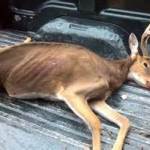
These remains appear to be that of a fawn.

These remains appear to be that of a fawn.

starring out the window hoping for spring’s arrival.  As for the wildlife, they of course do not have this option.  Unless they are of the variety that hibernates.  The rest are left to make do. They try to  maintain body temperature by seeking the shelter of trees, brush and snowbanks.  In the case of deer many are not making it. I spent this last weekend touring a wide area of west central Wisconsin, farm country, found 30 dead deer. There are probably more buried under the snow.

Due to the fall rut many bucks start winter weak with little fat reserves.  They spent their time mating rather than eating.  Now nature sees them as expendable and they are among the first to die during a severe winter like we are having now.

Due to the fall rut many bucks start winter weak with little fat reserves. They spent their time mating rather than eating. Now nature sees them as expendable and they are among the first to die during a severe winter like we are having now.

Fawns have a hard time in winter many of them will die as the adult does push them away from food in order to survive themselves.  The 2 year old doe is best prepared deer to survive winter.

There is very little that can be done at this point in time to save winter stressed deer.  It has been estimated during the winter of 1995 northern Wisconsin lost 126,000 deer to winter starvation.  Some expect this winter to have a similar winter kill statistic.  Or worse.

WDNR managers have been warning about another severe winter kill for years unless the herd was reduced. Many experts believed Wisconsin’s deer were pushing the land’s carrying capacity.  From my observations I believe they were correct.  Now nature is making the correction and nature always over corrects.

Next season some are going to blame the wolves but consider their situation.  The snow this season is

Some remains are above the snow indicating death was within a few weeks.

Some remains are above the snow indicating death was within a few weeks.

unusually dry, fluffy and deep.  There is no top crust for wolves to travel on, nor has there been any all season.  The going has been hard even for a man on snowshoes.  This means the wolves are floundering in deep snow most likely unable to catch prey.  They too are likely starving.  A reasonable person would expect, when fewer wolves are around next year the anti wolf hunters will blame the hunters and so that circle will go round and round.  Like wolves and deer chasing their tails.

The time to save the deer from this fate has passed for now.  I urge all hunters particularly those who manage land for deer to get out there and see what is going on.  Note all the food plots of clover and other low growing greens are buried under some feet of snow.  Acorns and other fall mast are buried and inaccessible.  What the deer need now is woody browse and many well meaning food plotters remove all of that. Make plans to maintain some above snow browse for next winter.  If there are trees that need to be or can be cut down you might want to consider dropping those this weekend.  February is the tree pruning month.


Because Box Elder trees hold their seeds into late winter and early spring they are a valuable source of food for both turkeys and deer.  Notice the seeds on the tree and scattered on the snow.  These trees continue time releasing seeds thus keeping a steady supply of food for wildlife.

Because Box Elder trees hold their seeds into late winter and early spring they are a valuable source of food for both turkeys and deer. Notice the seeds on the tree and scattered on the snow. These trees continue time releasing seeds thus keeping a steady supply of food for wildlife.

All areas will have shrubs and trees that given a chance will grow and provide winter time food.  For example in my area box elder trees are targeted as a native invasive and the state foresters urge their removal/eradication.  They are fast growing and if not managed will take over, however, they hold seeds through winter providing deer and turkeys with a valuable food source during times of starvation.

Filed Under: Deer Hunting, News Tagged With: deer, food plots, news, survival, winter, winter food

« Previous Page
Next Page »

Subscribe to Blog via Email

Enter your email address to subscribe and receive notifications of new posts by email. No other email will be sent to you.

comments

  • Justin on Bulllet Head Stamp Gallery
  • Kathy Eldred on Beavers Eat and Store Corn
  • Toney Jacob on Hunting Deer From the Ground in Wisconsin
  • Anthony Lumbard on Bulllet Head Stamp Gallery
  • Bryan Ash on Wild Turkeys See In Color; But Will Pink Spook Them?
  • Jim Sinquefield on How to Legally Bait Wild Turkeys

Top Posts

  • What do Wild Turkeys Eat?  Crops tell the story
    What do Wild Turkeys Eat? Crops tell the story
  • Wild Turkeys See In Color; But Will Pink Spook Them?
    Wild Turkeys See In Color; But Will Pink Spook Them?
  • Beyond The Patterning Board; X-Rays of Shot Turkey Head/Necks
    Beyond The Patterning Board; X-Rays of Shot Turkey Head/Necks
  • Run'n'Gun or Sit'n'Wait: Why Not Both?
    Run'n'Gun or Sit'n'Wait: Why Not Both?
  • Wisconsin 2018 Fall Turkey Drawing - Canceled
    Wisconsin 2018 Fall Turkey Drawing - Canceled
  • The Turkey's Snood Knows
    The Turkey's Snood Knows
  • Below Zero; Raccoons are Out?
    Below Zero; Raccoons are Out?
  • Planked Wild Turkey Breast
    Planked Wild Turkey Breast

Recent Posts

  • Kirkland Warbler, Wild Turkey use Audio Bait
  • A Little more Frigid or Warm; What is better for Wildlife?
  • West Nile Virus detected in Wisconsin Ruffed Grouse
  • When the Deer Season Ends
  • First Bubba Chili Pucks

Recent comments

  • Justin on Bulllet Head Stamp Gallery
  • Kathy Eldred on Beavers Eat and Store Corn
  • Toney Jacob on Hunting Deer From the Ground in Wisconsin
  • Anthony Lumbard on Bulllet Head Stamp Gallery
  • Bryan Ash on Wild Turkeys See In Color; But Will Pink Spook Them?

Videos

Mosquitoes use six needles to suck our … [Read More...]

Have you ever had a whitetail deer standing real … [Read More...]

Copyright © 2025 charlie elk


Loading Comments...